


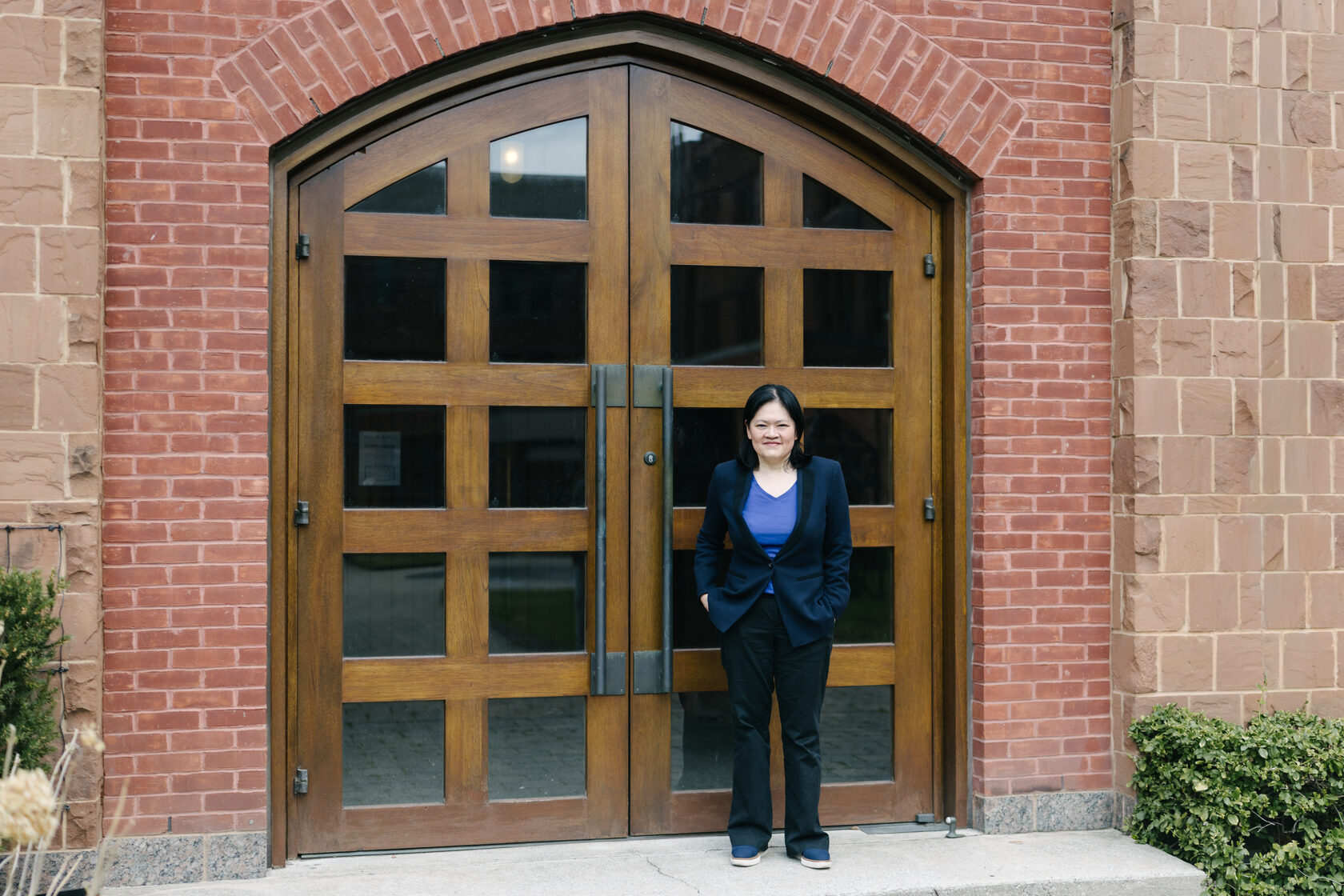
I met Professor Lynette Ong in the petite garden in front of the Munk School of Global Affairs & Public Policy. By the end of the winter semester, all the snow had finally melted, and it was a warm, sunny day. Professor Ong was waiting for me at a wrought-iron patio table next to the bright brick wall of the north wing. She projected confidence and calmness while also maintaining warmth.
Her confidence is certainly justified—she is truly a legend in her field. Professor Ong’s achievements are countless: she is Distinguished Professor of Chinese Politics at the University of Toronto, a leading scholar of Chinese politics and political economy, director of the China Governance Lab at the Munk School, author of four books on China and comparative authoritarian politics, a non-resident Senior Fellow at the Asia Society’s Center for China Analysis, and the Asia Pacific Foundation of Canada.
Her research has won numerous awards, including the Social Sciences and Humanities Research Council of Canada Insight Award; the American Sociological Association’s Distinguished Contribution to Political Sociology Award; the biennial Canadian Political Science Association Prize in Comparative Politics; the Human Rights Best Book Awards from APSA, ISA, and ASA; an Honorable Mention for APSA’s Gregory Luebbert Best Book Award; and the U of T Faculty of Arts & Science Dean’s Research Excellence Award. Meanwhile, her academic publications have appeared in Perspectives on Politics, Journal of Comparative Politics, Journal of Democracy, The China Quarterly, and The China Journal, among many others. Her research has also been covered in The Economist, The New York Times, The New Yorker, Foreign Affairs, Foreign Policy, The Wall Street Journal, The Washington Post, and The Globe and Mail, among others.
In this interview, Professor Lynette Ong discusses how her academic journey, personal background, and research on China have shaped her work as a scholar of authoritarian politics, political economy, and comparative politics. The interview also reflects on her teaching, the China Governance Lab, the risks of fieldwork in China, and her future research directions.

Could you tell me a little bit about your academic journey and how you would describe the relationship between your academic work, policy engagement, and public-facing research throughout your career?
My academic journey began in Southeast Asia. Although my first two degrees were in economics, I decided to delve deeper into political science. As an ethnic Chinese born in Southeast Asia, I decided at the very beginning of my career to specialize in my native country's politics. When I finished my studies in the early 2000s, I went on to work in the government sector and in private consulting in Singapore, which only strengthened my conviction to pursue political science as my vocation.
At the time, China's economy was on the rise, and many of my clients were eager to invest there. After working in private consulting for several years, I decided to return to graduate school. I pursued a PhD in political science and China studies at the Australian National University, followed by a postdoctoral fellowship at Harvard University's Fairbank Center for Chinese Studies.
After completing my PhD, I launched a global job search, and the best of the three offers I received came from the University of Toronto. Upon arriving in Toronto, I was struck by how multicultural and hospitable the city was. As I took a cab from Pearson Airport to a hotel near the St. George campus, small details — the many Chinese-language signs I saw along the way — reminded me of home. The weather also caught me off guard: although I had been warned how cold it gets, I didn't expect it to be quite that extreme.
Today, my work continues to reflect that movement between different places, disciplines, and audiences. Right now, I'd say I spend around 70% of my time on academic work and 30% on public-facing work. I'm regularly invited to public-policy or government forums, which let me bring my academic research to a broader policy audience.
What initially drew you to studying authoritarian governance in China, and how has that interest shaped the way you think about political systems more broadly?
Having grown up in political settings shaped by a strong authoritarian influence, I've always been drawn to understanding that landscape. Within an authoritarian system, there are many puzzles to be solved, and I tend to look at the world through that lens. Even when I analyse democracies, I pay closer attention to their half-empty side. Democratic backsliding, for instance, is itself an authoritarian tendency. In many ways, I see political science as an institutionalisation of human psychology.
How has your experience working across different countries shaped your understanding of education, political science, and the way political systems function in different cultural contexts?
Having worked in a number of countries throughout my academic and non-academic careers, I've come away humbled by what I've seen. I'm a fairly open-minded person, partly because of my exposure to different places, systems, cultures, and their social outcomes. I'm fascinated by how divergent circumstances can bring different parts of the world together, and my experience across multiple cultural systems helps me connect the dots a little better.
Having worked and studied at several influential academic institutions, what would you say have been the most formative intellectual influences on your academic trajectory?
Academia, in my opinion, is a very insular system. People in academia tend to stick to tradition, and there's nothing wrong with that, because the bar for substantiating an argument is very high. My own work, however, is unusually interdisciplinary for someone situated within academia, so I wouldn't say I've been shaped by any one particular tradition or school of thought.
My curiosity is my only real boundary. It's simply a never-ending learning curve.
What drew you to teaching, and how has your relationship with teaching and public communication changed over the course of your career?
Teaching is something I genuinely enjoy, though that wasn't always the case. There was a time when I thought I'd become a researcher and wouldn't want to teach at all — the idea of communicating with a large audience didn't appeal to me. But people change. Similarly, if you'd asked me 25 years ago whether I'd enjoy talking to the media, I would definitely have said no. These days, if you stick a microphone in my face, I can talk about almost anything.
I mainly teach fourth-year seminars and graduate students, including master's students, on authoritarian politics from a comparative perspective, and PhD comparative politics field examination. But I also have experience teaching undergraduate courses on global China and domestic Chinese politics. Next year, for example, I'll also be teaching a large first-year undergraduate course on Global China at the Munk School of Global Affairs and Public Policy. That's genuinely exciting, as it's a real personal challenge: I'm used to teaching at a level that assumes a certain degree of background knowledge, but this course is meant for a much more general audience.
To keep things interesting, I try to change my syllabus every year. Chinese politics isn't stagnant — it changes quite rapidly — so I try to retire outdated material and bring in new readings.
What is the biggest challenge to teaching about China today, especially in the Western classroom?
In that sense, I'm somewhat fortunate. Debates about China can be highly polarised, but thankfully, I haven't seen much of that here in Canada — there's some anti-China sentiment, but not much. I've heard of plenty of cases at other universities where young nationalists from China have pushed back against what most consider well-established facts, such as the labour camps in Xinjiang or the violent repression in Hong Kong. Thankfully, I haven't come across many such students in my own career — no more than six in twenty years of teaching.
Maybe that's because my students are self-selected, or because Chinese nationalists are simply outnumbered in my classes and choose not to speak out. Either way, my academic blessing is being able to have decent, frank discussions with my students without worrying about polarised views or being misquoted.
That said, there are real professional risks and costs involved in teaching Chinese politics today. You have to accept that, whatever you say, there will be powerful authorities who disagree with you. Many people aren't willing to take that risk, and it's something I think about often.
What has been the most rewarding side of teaching so far?
Seeing students do very well. Sometimes I can just tell that a student has real potential. Every so often, I'll get an email from someone I taught years ago, and I'll learn they're now working for the Prime Minister’s Office or holding a director-level position in global affairs. That's deeply rewarding, personally.

Could you tell me about the China Governance Lab and the role you hope it plays in training and supporting the next generation of China scholars?
As I understand it, a university research lab should act as an incubator — a place that cultivates the next generation of China scholars and brings them together. It's incredibly important to spark students' curiosity throughout the learning process. Within my own lab, I place an emphasis on immersing students in all the resources available to them and then letting them learn independently.
This year, in particular, we're focused on graduate fellows. I personally handpicked six graduate fellows — master's and PhD students — and I hold weekly office hours to coach them individually. Research fellows in the lab conduct book reviews, interview authors of recently published books, and carry out their own research projects, collecting and presenting original data. We also run several other projects within the lab; for instance, we're currently working to bring in undergraduate students through a public-policy and global-affairs essay contest.
What kind of intellectual or professional, uh, transformations have you witnessed in your students since you launched the lab?
A major part of one of the lab's projects focuses on social unrest in China. That work actually predates the lab itself — I've been running it for more than 15 years, with over 100 alumni participants. Some have gone on to law school, PhD programmes in various disciplines, or careers in government. Watching my students succeed is really what clarified my purpose as a teacher: to open doors for those who want to pursue careers in politics.
What qualities do you think are the most important for those students who are interested in specialising and working in authoritarian politics and/or China’s political system?
Curiosity, and a genuine willingness to embrace different mindsets and assumptions about the world and other people. You also need to be open to being influenced, and to work hard — it's a highly competitive field. If you have those qualities, you'll do reasonably well.
Are there any particular scholars or intellectual traditions that have influenced your work?
In general, I tend to gravitate toward authors who work across a number of disciplines. James Scott's work, for instance, has been a real influence — it resists being defined by any single discipline, which resonates with me, as it does with a lot of people. I also admire thinkers who sit between political science and sociology, such as Theda Skocpol.
What sources would you recommend to students or readers who want to better understand authoritarianism, Chinese politics, and China’s role in the world today?
I'd say go read The New York Times, Financial Times, and The Economist — they have excellent China coverage. If you read Chinese, I’d recommend Initium Media (端传媒)。
What advice would you give to those who want to pursue their careers in studying China's political system?
You have to have the stomach for uncertainty — there's really no better way to put it. Perseverance, strength, and patience are essential, and it helps to be a risk-taker, since a certain degree of risk in this field is almost unavoidable. To succeed, you have to put yourself out there and be willing to do things others wouldn't. Conviction matters too; without it, it's easy to sell yourself out.
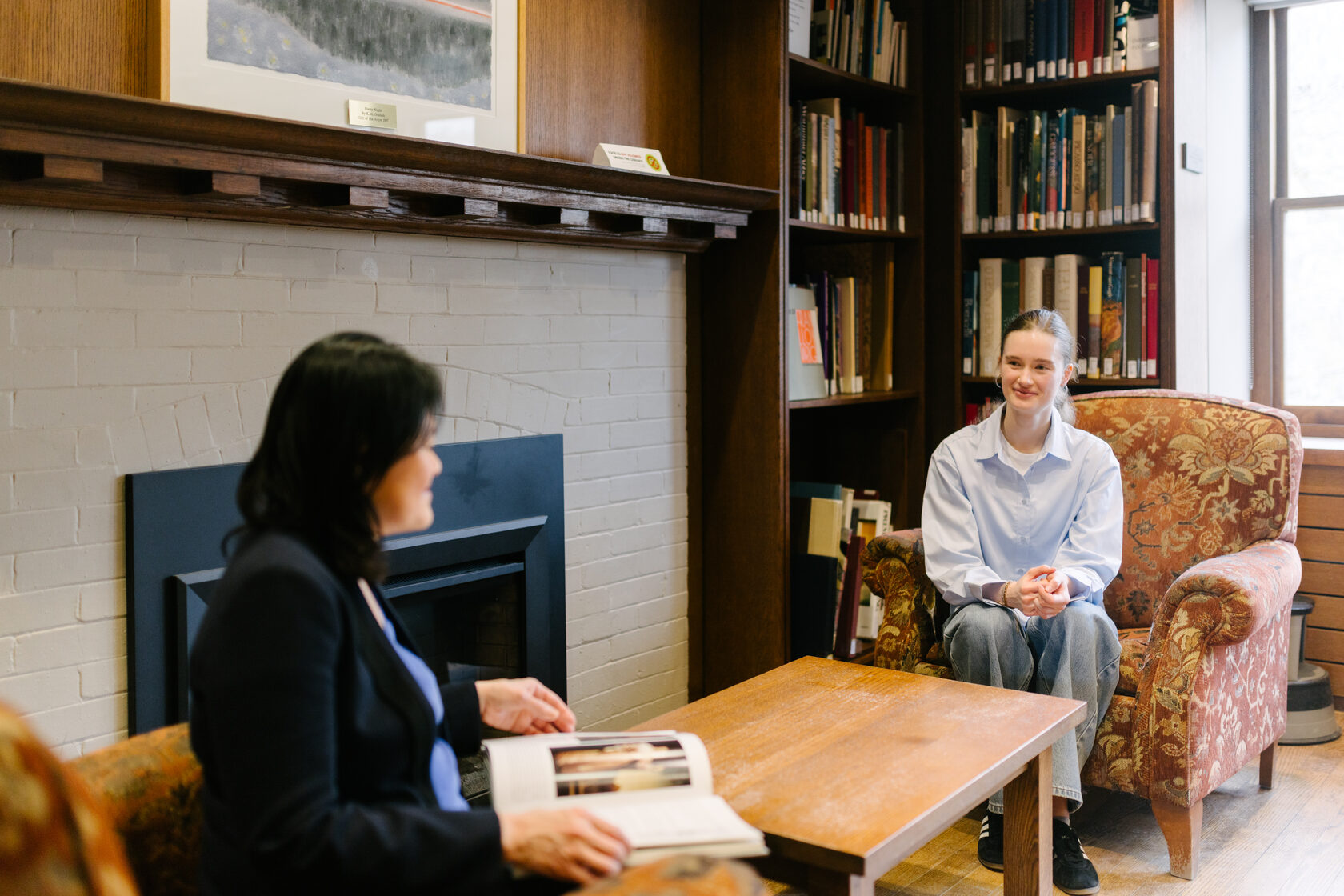
Outsourcing Repression: Everyday State Power in Contemporary China involved nearly a decade of research and fieldwork across China. What were some of the biggest challenges you faced in bringing that project together?
This book took me through several stages of life. At some point, I even became quite depressed at one stage, partly because the project dragged on for so long — it was an incredibly difficult undertaking. I started it in 2012, and during the COVID-19 pandemic, I couldn't travel, so I made very little progress. I told myself if I didn't complete writing it during COVID, I probably would never get it done.
There were other challenges over the course of research and data collection, too — for example, I had seriously doubted whether I'd ever be able to bring all my data together. I'd collected so much over the course of the project that I didn't always know how to make use of it. Making the data coherent was a colossal challenge.
In total, I travelled to eight different cities over the first eight years in order to piece together a coherent story. Some data points pulled me in different directions and were very demanding to reconcile, which is part of why I let the project drag on for so long.
A second major challenge was the sheer difficulty of conducting field research in China. The project began in 2012 at the end of Hu Jintao's tenure and continued into the start of Xi Jinping's governance. Xi's first term was actually relatively fine, but around 2016 — the start of his second term — a number of new security laws, along with regulations affecting academic work, came into force. As a result, people in academia grew increasingly cautious.I was already halfway through the project, so quitting wasn't really an option.
Between 2012 and 2020, when I finished the book, I took two sabbaticals in China: the first in Beijing in 2012, and the second in Shanghai and Beijing in 2016. Those sabbaticals let me be based in the country and travel from there, giving me a real sense of the situation on the ground.
How have you navigated moments of personal or professional pressure in your fieldwork and public policy work?
Given the kind of research I do, it would be surprising if I never felt that way. Field research in China can sometimes expose you to real personal risk, and my public-policy work has occasionally put me in situations where I'm questioned by both the pro-China and anti-China camps.
That said, it doesn't particularly bother me. It comes back to conviction: if you believe in what you're saying, especially in public, that belief becomes the anchor that keeps you moving forward according to your own priorities. Those who treat public statements as something to be shaped to fit certain outcomes are the ones who tend to feel uneasy when they're challenged.
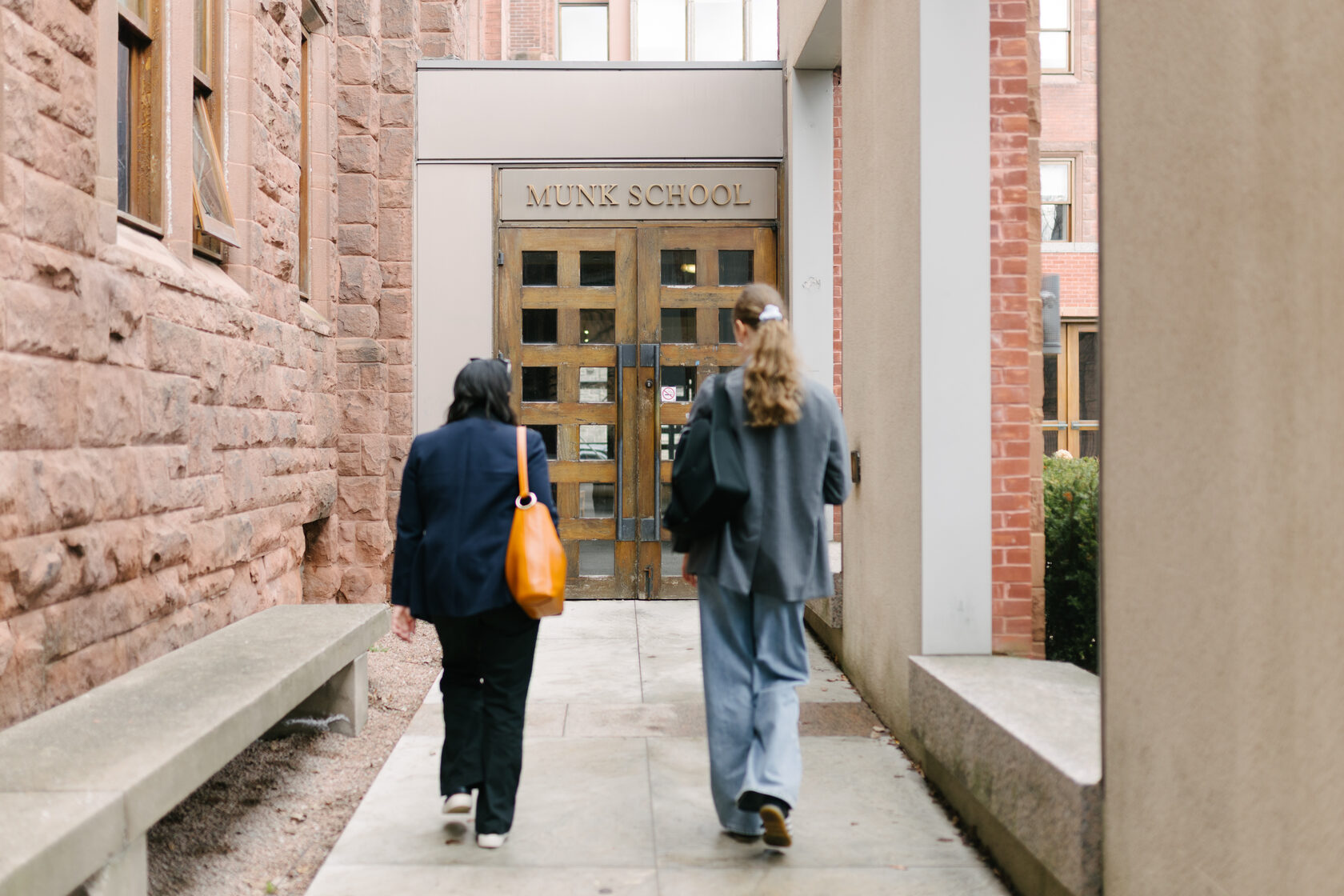
What are your plans for future research?
Given the growing restrictions on field research in China, I'm shifting in a more digital direction. I'm still travelling to and from China and writing about Chinese politics, but I'm also developing projects outside that space. Even though I'm primarily a comparative-politics specialist, my work is shifting increasingly toward international relations — those interested in China's public policy increasingly want to understand its international-relations dimension, which is pushing me to incorporate that angle into my writing.
What contribution do you hope your research will make to the broader field of comparative politics?
China studies tends to be somewhat isolated, partly because there are so many fields and subfields involved. China is large and distinctive, so it's often treated as an outlier. The traffic has usually run one way — China scholars draw on the comparative-politics literature, but comparativists rarely draw on ours. I think it should run both ways.
So I hope to help break down that isolation. There's a great deal of conversation to be had between China and other countries, and I'd like to help build partnerships between those who write about authoritarian politics broadly and those who specialise solely in China.
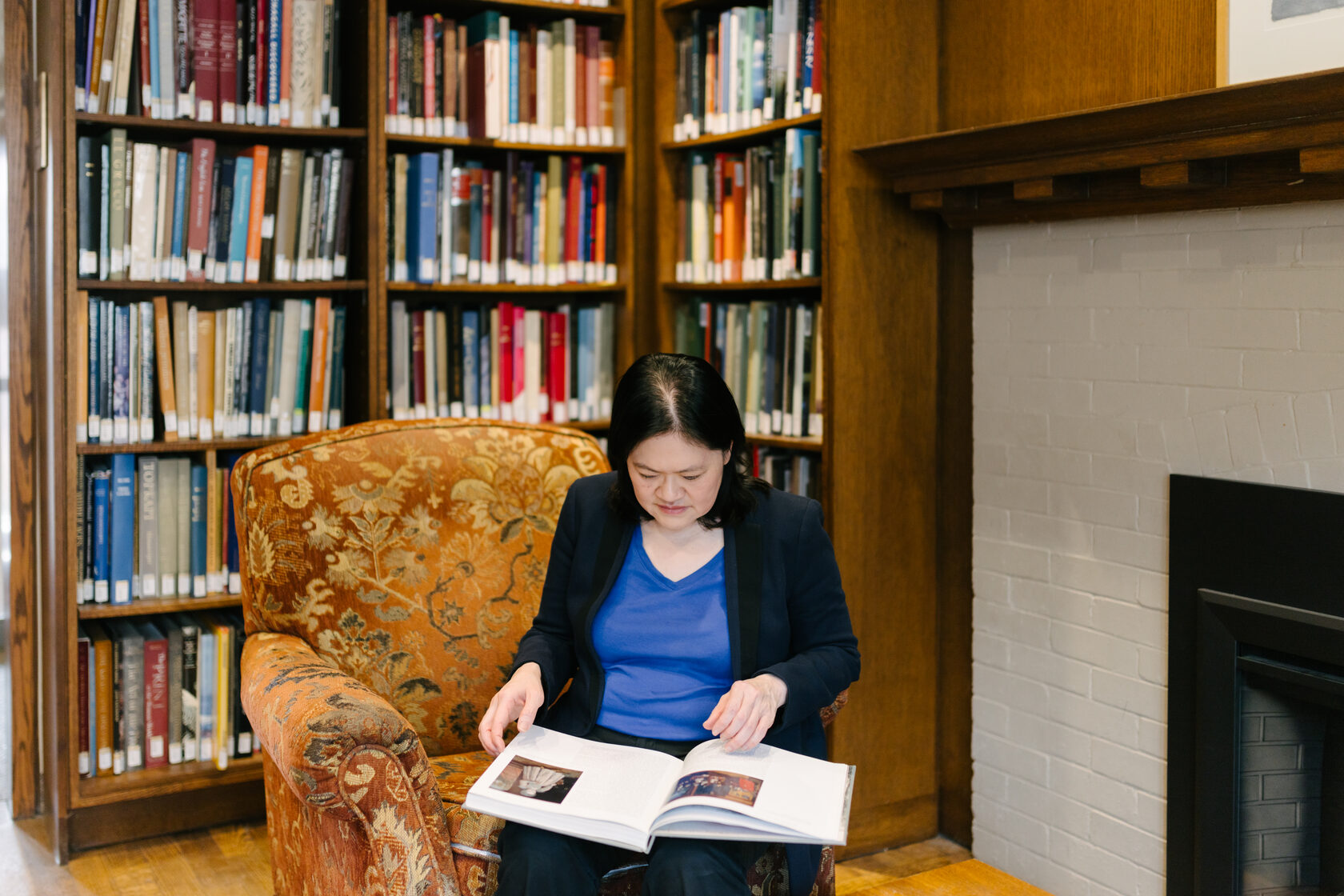
Professor Lynette Ong is a Distinguished Professor of Chinese Politics at the University of Toronto, with appointments in the Department of Political Science and the Munk School of Global Affairs & Public Policy, where she directs the China Governance Lab. Her first two degrees were in economics, and she worked in government and private consulting in Singapore before completing her PhD in China studies at the Australian National University, followed by a postdoctoral fellowship at Harvard and visiting fellowships at Columbia, Peking, and Fudan universities. She is also a nonresident Senior Fellow at the Asia Society’s Center for China Analysis and at the Asia Pacific Foundation of Canada. Her research spans authoritarian politics, contentious politics, and the political economy of development, and she is the author of four books, including Outsourcing Repression: Everyday State Power in Contemporary China (Oxford University Press, 2022), which has won seven best book awards. Her work has appeared in Perspectives on Politics, Comparative Politics, Journal of Democracy, The China Quarterly, and Foreign Affairs, and has been covered in The Economist, The New York Times, The New Yorker, The Wall Street Journal, and The Globe and Mail.
To find out more about Professor Ong visit:
Her personal website — lynetteong.com
The China Governance Lab at the Munk School — chinagovernancelab.org
Her faculty profile, University of Toronto Department of Political Science
Outsourcing Repression: Everyday State Power in Contemporary China (Oxford University Press, 2022) is available to read free of charge under an open access licence.
Photos: Victoria Lumière Photography
Her personal website — lynetteong.com
The China Governance Lab at the Munk School — chinagovernancelab.org
Her faculty profile, University of Toronto Department of Political Science
Outsourcing Repression: Everyday State Power in Contemporary China (Oxford University Press, 2022) is available to read free of charge under an open access licence.
Photos: Victoria Lumière Photography
