


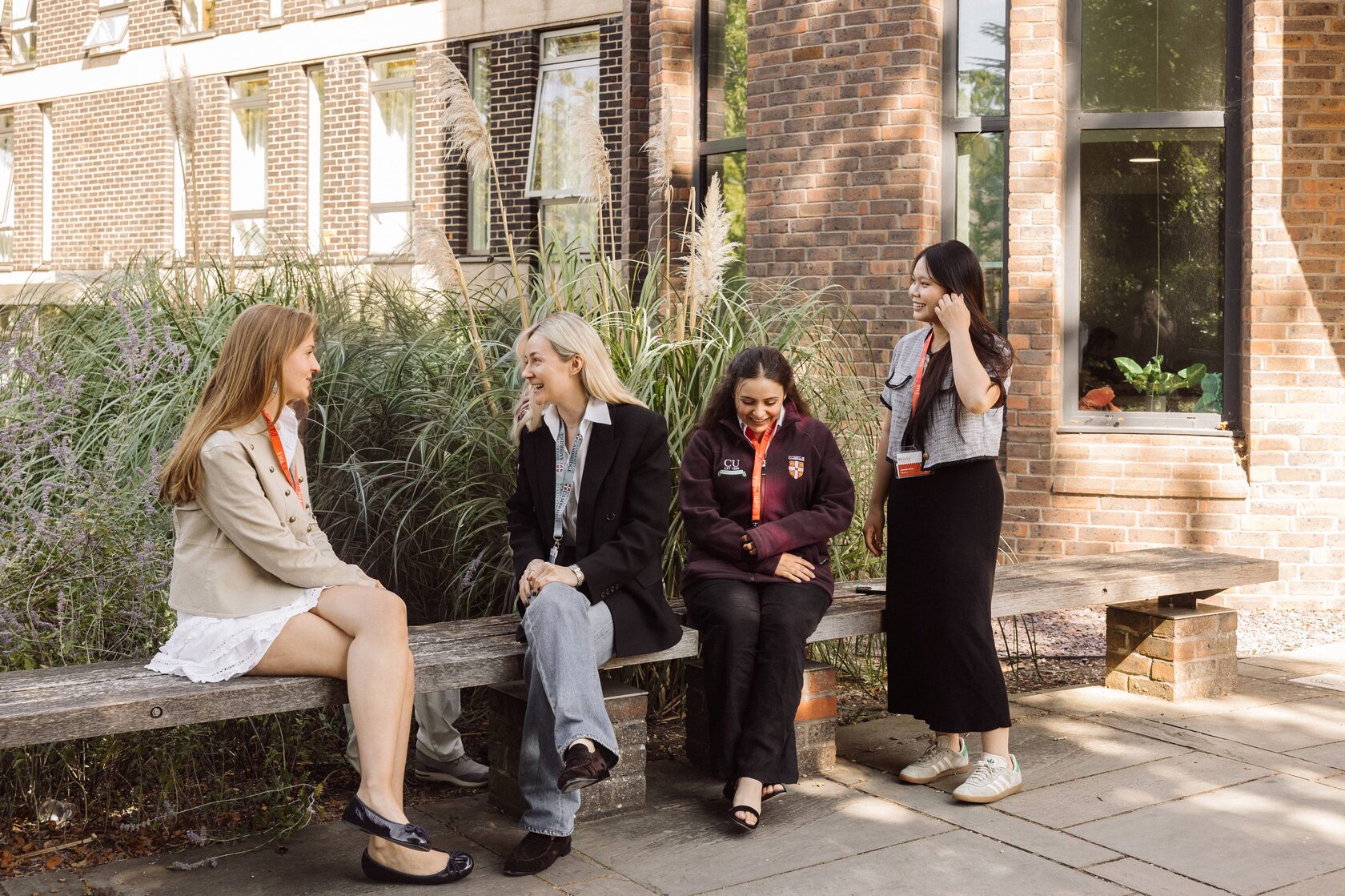
What happens when secondary-school students from very different educational systems spend two weeks in an environment that asks them to think differently? At Fitzwilliam College in the University of Cambridge, I spoke with three academics behind the FitzEd Summer School Programme, and with three students living through it, about uncertainty, independence, intellectual discomfort and the difficult passage from being good at school to becoming a university thinker.
The experiment was supposed to come out black or white. It has come out grey. The student carries it across the laboratory to Dr Ashraf Zarkan and asks him which one it is.
"I do not know," he says. "You tell me."
Dr Zarkan has seen the face that follows this often enough to imitate it: surely there is an answer. At school, there almost always is. Somebody in the room is holding it, and the work consists of getting to it faster and more accurately than the person at the next bench. Two weeks at Cambridge are not long enough to dismantle that idea, though they are apparently long enough to put a crack in it.
I came to Fitzwilliam to find out where the crack forms.
In my work as an international education adviser, I accompany young people and their families through what can be a long preparation for university, and it is only occasionally about where a student eventually applies. Most of the more important work happens years earlier: understanding what genuinely interests them, identifying how they learn, exposing them to academic experiences serious enough to matter, and letting their assumptions about themselves be tested while the consequences are still small.
Three of the students in this article — Anna, Saieesha and Yasmina — are young people I have been working with through exactly that process. I therefore arrived with an unusual vantage point. I knew the ambitions, strengths and open questions they had brought with them, which meant I could watch for something beyond whether they were enjoying themselves: what the fortnight was doing to the way they thought about university, about medicine and about themselves.
Alongside them I spoke with three academics who approach the same problem from three directions. Dr Peter Bolgar, Fellow and College Lecturer at Fitzwilliam, directs the FitzEd educational programmes. Dr Ashraf Zarkan is a Research Fellow and Group Leader in the Department of Genetics at the University of Cambridge and a Bye-Fellow of Fitzwilliam — a college fellowship held alongside a university post. He teaches the programme's strand on biology and genetics with a focus on infectious diseases. Dr Alex Carter is Academic Director for Philosophy and Interdisciplinary Studies at the University of Cambridge and a Fellow and College Lecturer at Fitzwilliam, and teaches the programme's strands on study skills and on creative thinking in the age of AI.
Three very different conversations, and the same idea surfacing in all of them: at school, students are rewarded for knowing the answer, and university becomes interesting at the point where knowing the answer stops being enough.
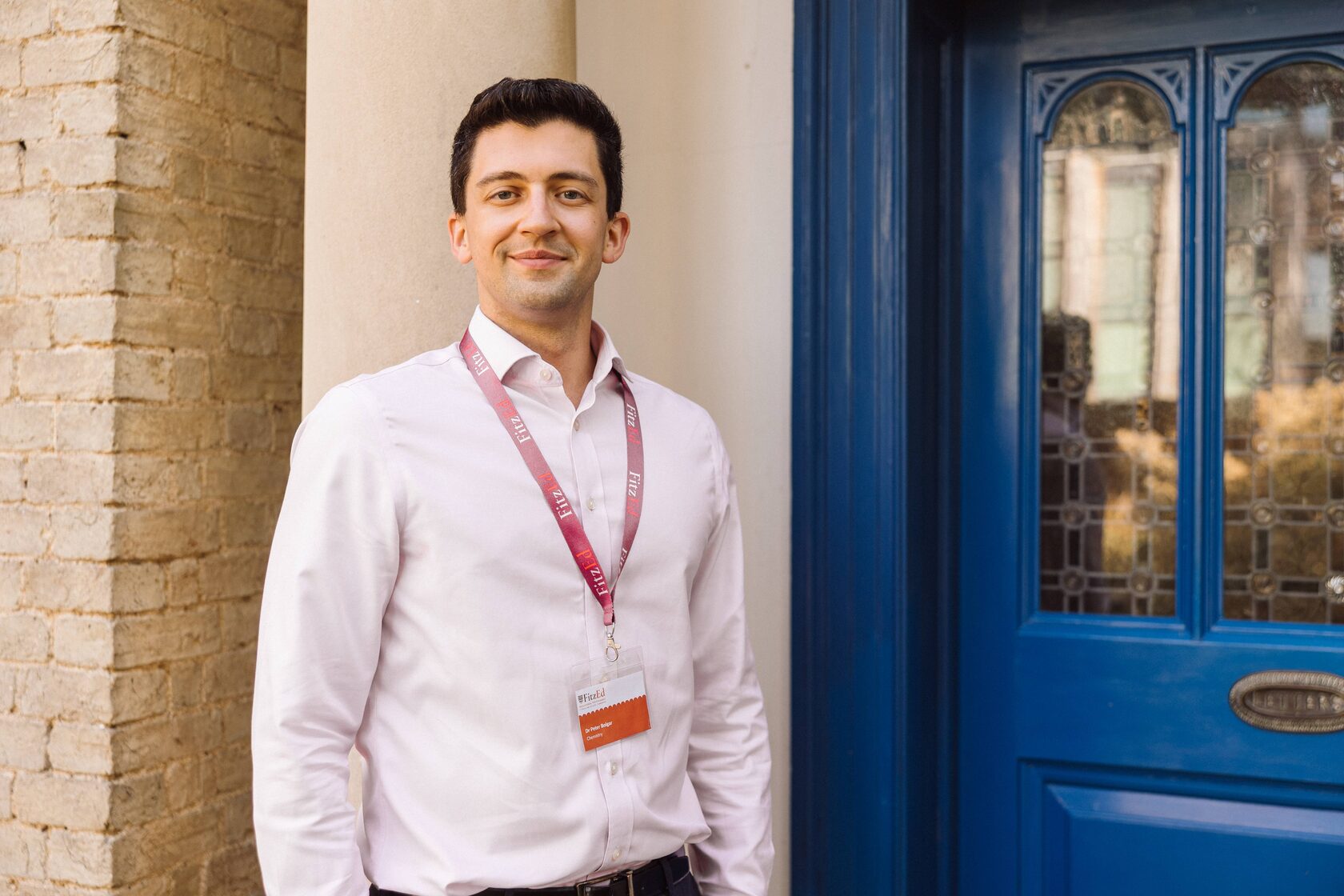
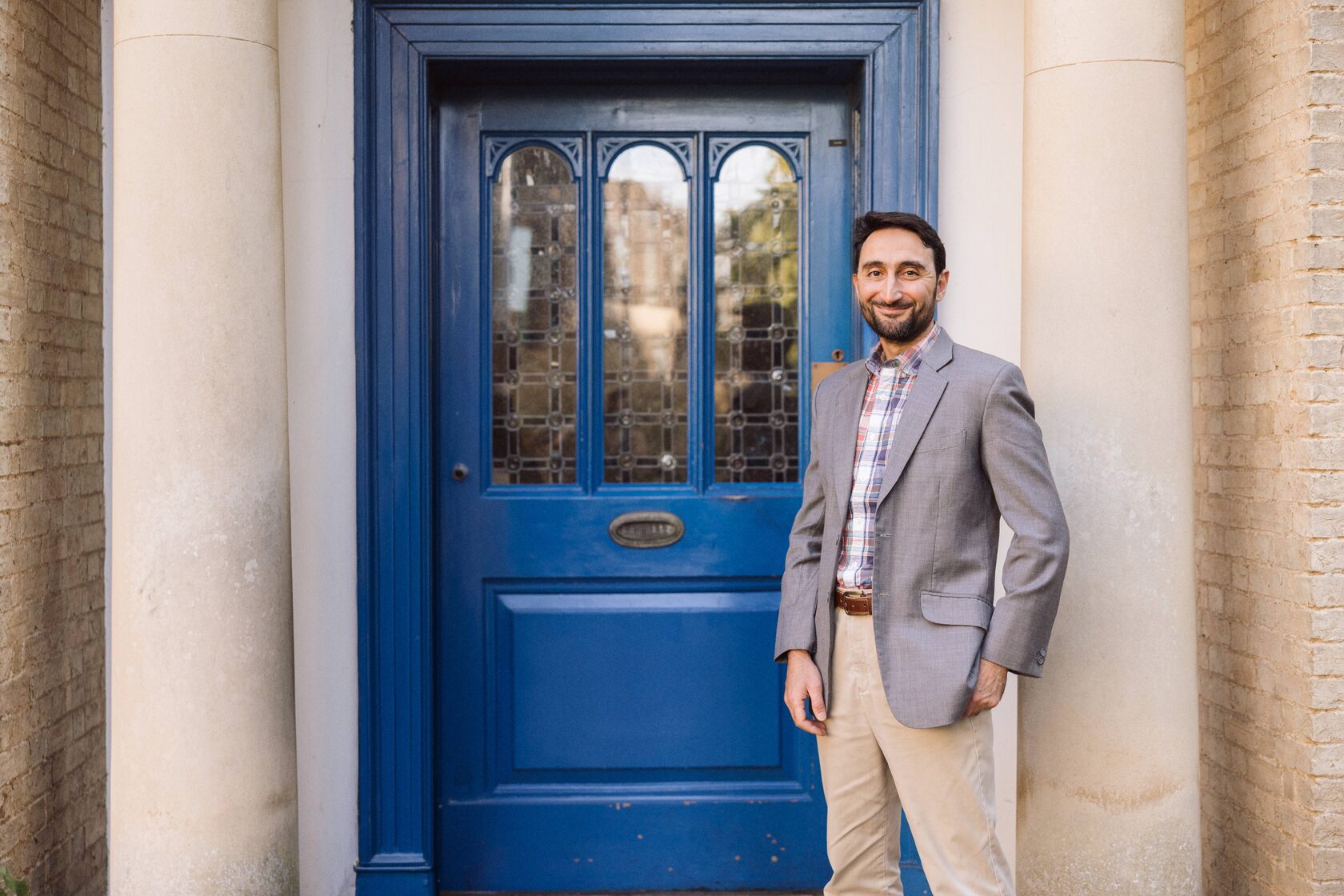
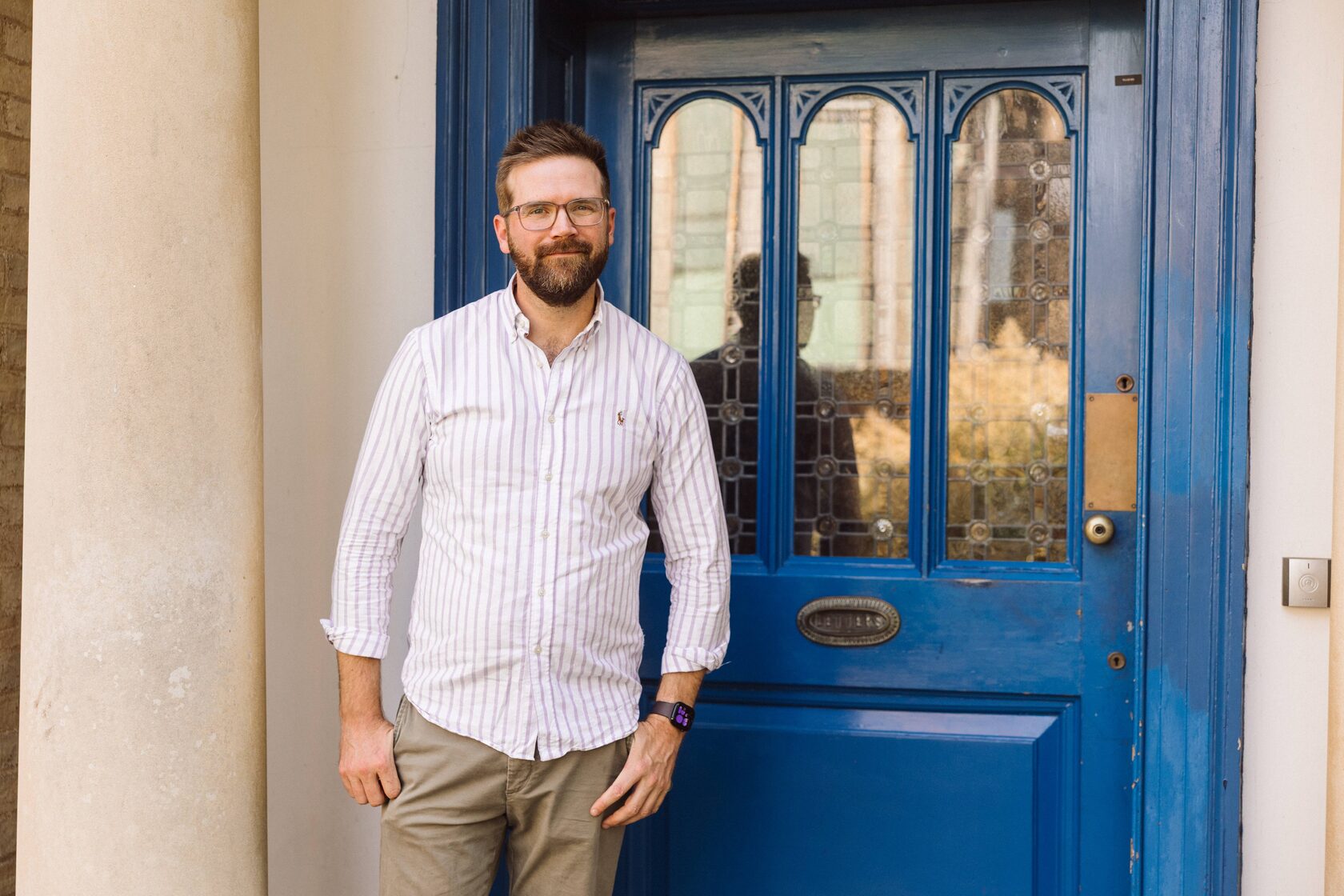
Three approaches to the same problem: Dr Peter Bolgar, Dr Ashraf Zarkan and Dr Alex Carter, photographed at Fitzwilliam. Dr Bolgar leads on programme development and delivery, Dr Zarkan teaches the microbiology course emphasising dealing with the unknown and uncertainty and Dr Carter focuses on teaching creative thinking skills.
Dr Peter Bolgar: why build a summer programme differently?
What educational problem were you trying to solve when you created the FitzEd Summer School Programme?
Dr Bolgar: We created our summer school programme with international students in mind, to help them develop their academic skills and therefore to help them make even stronger applications to universities abroad.
It is very often the case that students are taught in ways at school that sit some distance from how they are going to be taught at university. And especially at Cambridge, education is very much based on communication, on dialogue. It is interactive — most importantly at the supervisions between the supervisor and the students. So students need to know how to engage, how to be active learners, and we really want to give them a real flavour of this.
Another aspect is practical learning. We try to incorporate as much of that as possible. On some of the relevant courses the students go into undergraduate teaching laboratories to do perhaps the same experiment they will later do as undergraduates. For many of the other courses, they do practical sessions within the College.
What did you believe was missing from the summer programmes already available to international students?
Dr Bolgar: Originally, Cambridge colleges used to rent out their teaching space and facilities to commercial third-party summer school providers. However, education is our bread and butter, that is what we are known for. We thought to create a summer school programme that is run directly by the College in all of its aspects, including the educational provision. The academics who teach on our summer school are the same academics who teach the undergraduate students across Cambridge. All of our courses, in their entirety, are delivered by current faculty members of the University of Cambridge and its constituent colleges.
Your welcome message describes the programme as offering students something very close to a university experience. What supports that claim?
Dr Bolgar: The faculty members in charge of the courses are the same academics who teach students across the University. The academic component authentically represents what they will be getting at university. Spending two weeks with the same academics who might be teaching them later on in their university education is extremely valuable, because they take up their way of thinking, their way of approaching problems early on, before they apply to university.
We also have the supervision component, which we model on the supervision system at Cambridge. At these sessions the students meet with their academic course instructors in groups of two or three or four. The students are sent a problem set the day before their supervision. They need to be responsible individual learners and set time aside to solve problems, all whilst a lot of activities are going on every afternoon and evening. The students are expected to solve all the problems to the best of their knowledge and then present their answers to their academic course instructor. Their work is evaluated at the supervision, and their knowledge is extended by building on the problems. It is very much what we do as part of our undergraduate education.
The distinction between being handed work and taking responsibility for your own learning sounds like a small one. For the students, it turned out to be among the most demanding transitions of the fortnight.
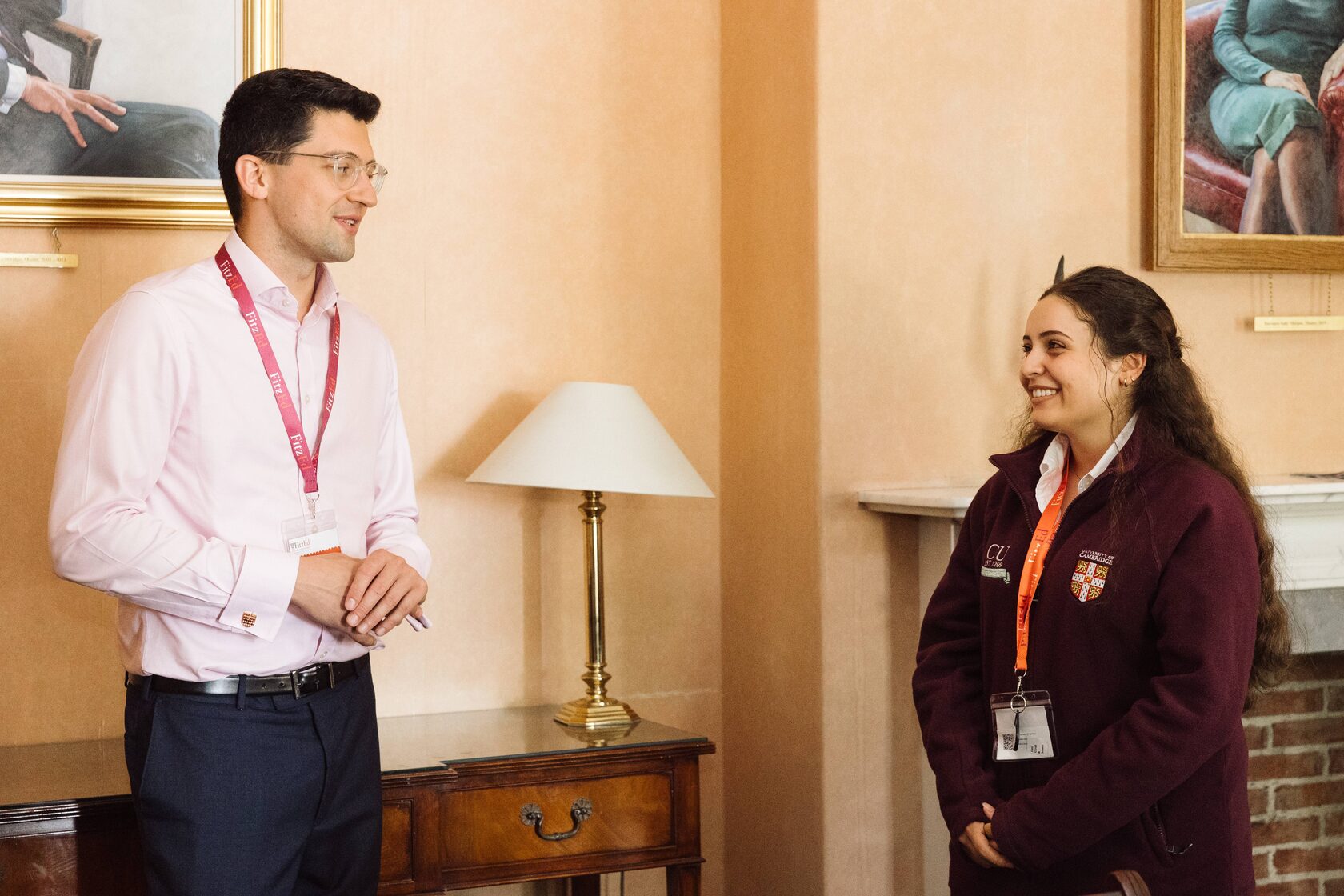
Dr Bolgar with Yasmina at Fitzwilliam College. The programme's supervisions are modelled on the Cambridge undergraduate system: groups of two to four, a problem set sent the day before, and one hour in which everything you failed to prepare becomes visible.
"They ask questions very differently here"
Before you arrived, what did you imagine this would be like? Was it what you imagined, or was it somehow different?
Anna, Germany: Before I came here I thought I was going to get an insight into the life of a student in Cambridge: their everyday life, what the lectures are like. And I actually got what I thought I was getting. I really enjoyed the lectures, because it is a great opportunity to see what university life looks like, especially here. And it is a chance to listen to professors who teach students at Cambridge, which is just not something you experience every day.
When I first came here, my parents said to me, "This is such a great opportunity. I'm a bit jealous of you that you can experience that." And when I go back home now, I am going to tell my father that it was absolutely worth it and that I gained a lot from it.
Any adviser who has spent time with families around a summer programme will recognise the jealousy. A certain number of parents would attend themselves if the age limit could be quietly adjusted.
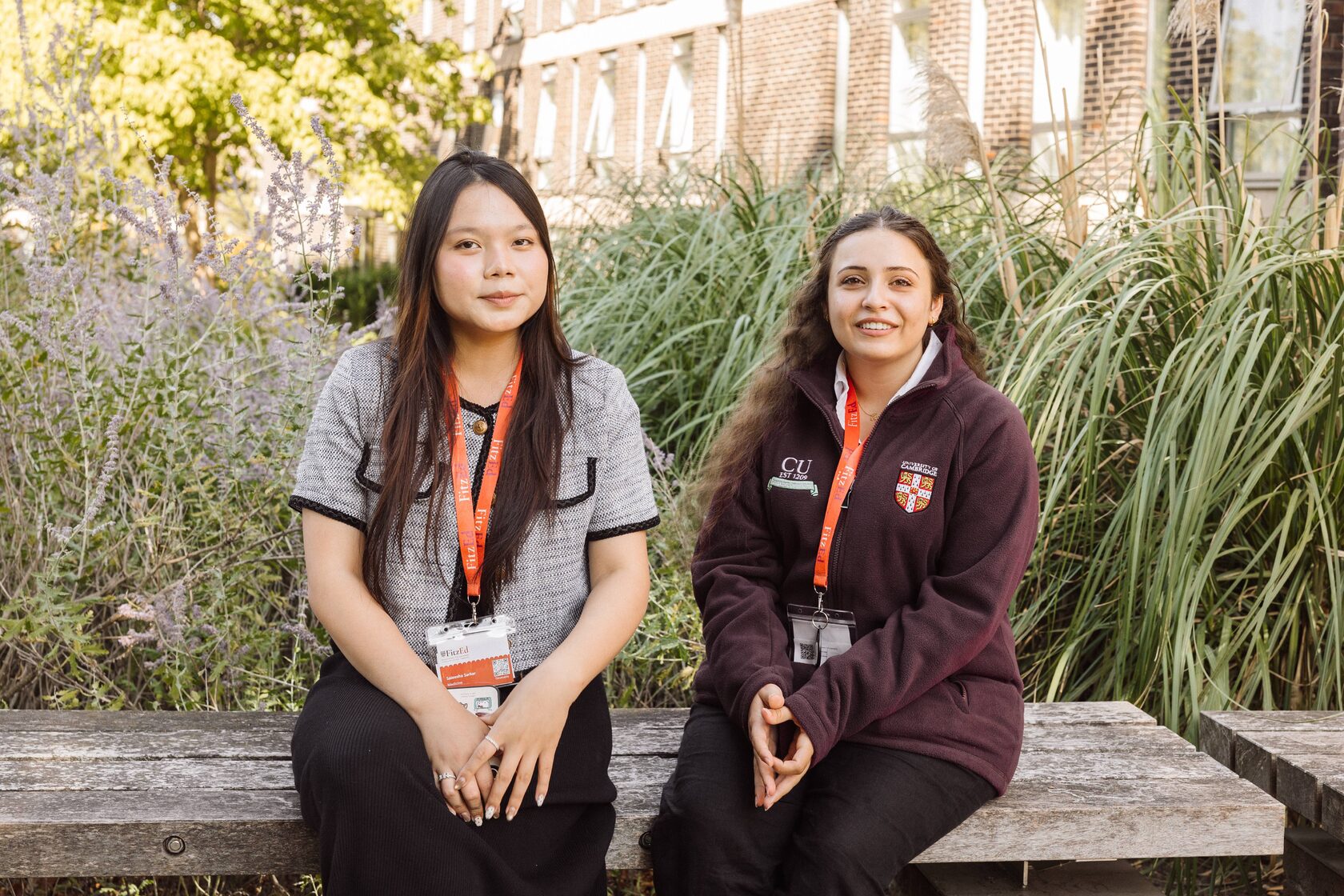
Saieesha (left) came from Laos, Yasmina from the United States. They sat the same lectures, the same practicals and the same supervisions as Anna, and left the fortnight in three different places.
Saieesha, Laos: It was a wonderful experience for me. I got to see the perspective of the medical students here in Cambridge and what their lifestyle is like, what their workload is like. Obviously there is going to be much more workload as a medical student, but I think I got some sense of what the pressure is like and how they learn in the lectures. It was a really good opportunity to meet the professors who teach the medical students here, and I got a lot of insight from it.
Yasmina, United States: This was really different from anything I have ever done regarding colleges. Being from the US, they ask questions very differently here. The style of lectures you often get in the US is a lot of them throwing information at you, and you are expected to work it out with the people around you. But over here it is definitely more one-on-one, and the questions they ask are abstract — really abstract, to the point where they are expecting you to think far beyond what you already know.
Everything I am picking up here I could definitely apply later on.
Their first reactions were already distinct from one another. The differences grew considerably sharper once we started talking about whether they had actually been prepared for the academic level of the course.
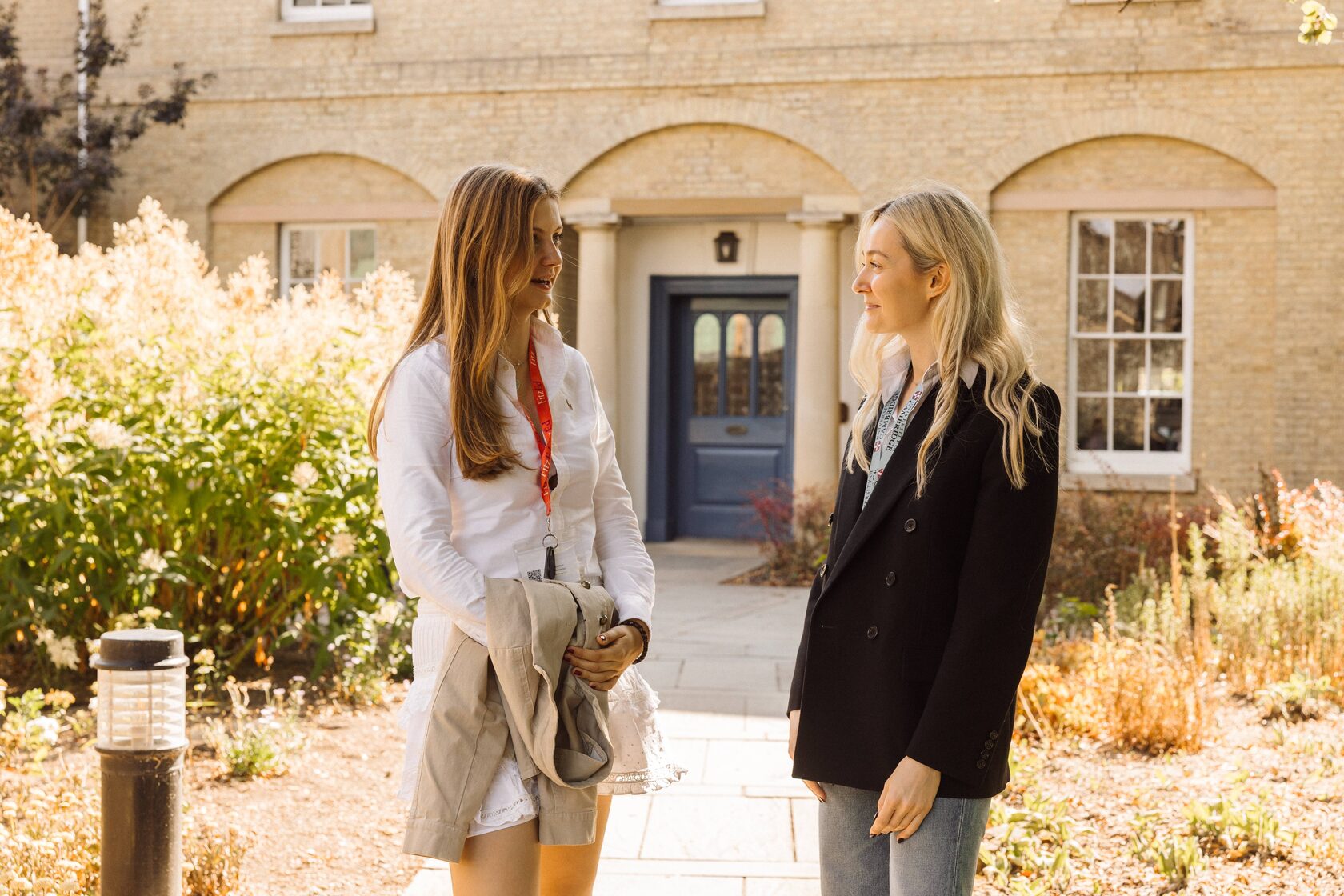
Anna came from Germany with a year of A-level biology behind her, and credits it with the difference between following the course and struggling through it.
Dr Ashraf Zarkan: "There is no answer"
Where Dr Bolgar describes the programme's intentions at an institutional level, Dr Zarkan approaches the same transition through science. His own route has crossed pharmacy, the pharmaceutical industry, hospitals, biochemistry, genetics and microbiology, and that breadth shapes how he teaches: science arrives in his classroom as an unfinished argument about problems that remain open.
What is the one idea that most completely overturns a student's previous understanding of biology or microbiology?
Dr Zarkan: The most basic idea I find all students sharing is that when it comes to microbiology, or biology in general, if you are thinking about developing new therapies or tackling new things, they imagine, "Oh, this is being taken care of by researchers and the pharmaceutical industry." And this is the wake-up message I try to bring here, to say: not really.
Researchers are tackling bits and pieces. There are a lot of unknowns out there that are awaiting people like you in the future to do some research. And pharma companies are probably prioritising what is more profitable, over what is currently needed. That challenges them at a basic level, where they think: you are going to tell me the problem, and you are going to tell me the solution. And I end up telling them a lot of problems and saying, "We don't have a solution for that yet." So I think this is where they realise: oh, there is no answer yet.
School science can look to students like a collection of established facts. How do you introduce uncertainty, disagreement and incomplete knowledge?
Dr Zarkan: In schools, let's imagine they go to a lab and do basic experiments. They always expect that at the end there is a correct answer and a wrong answer. And this is one of the basics we try to challenge here, by saying, "We do not know."
Normally when I set an experiment, there is always an element of ambiguity. One of the advantages of the course I run is that I manage to incorporate a practical element — they get four practical sessions during the course. And sometimes, the way I look at it, the best way to learn is to do it. When you do the experiment and you imagine, "I'm going to get black and white," and you get grey, then you come to me and say, "Is this black or white?" I say, "I do not know. You tell me."
And this is where I can see their faces: surely there is an answer. I say, "I don't know. The answer depends on how you did the experiment, exactly what went on behind the scenes. There are a lot of factors that might affect the results. Some of them are biological factors. Some of them are human errors. I cannot pinpoint what went wrong."
I think that challenges their initial assumption that there is always a correct answer that the teacher is going to give them. They come out of the course realising that when it comes to research, you will get to a point where people look up at you and say, "You tell us what you think the correct answer is." And someone else might challenge it.
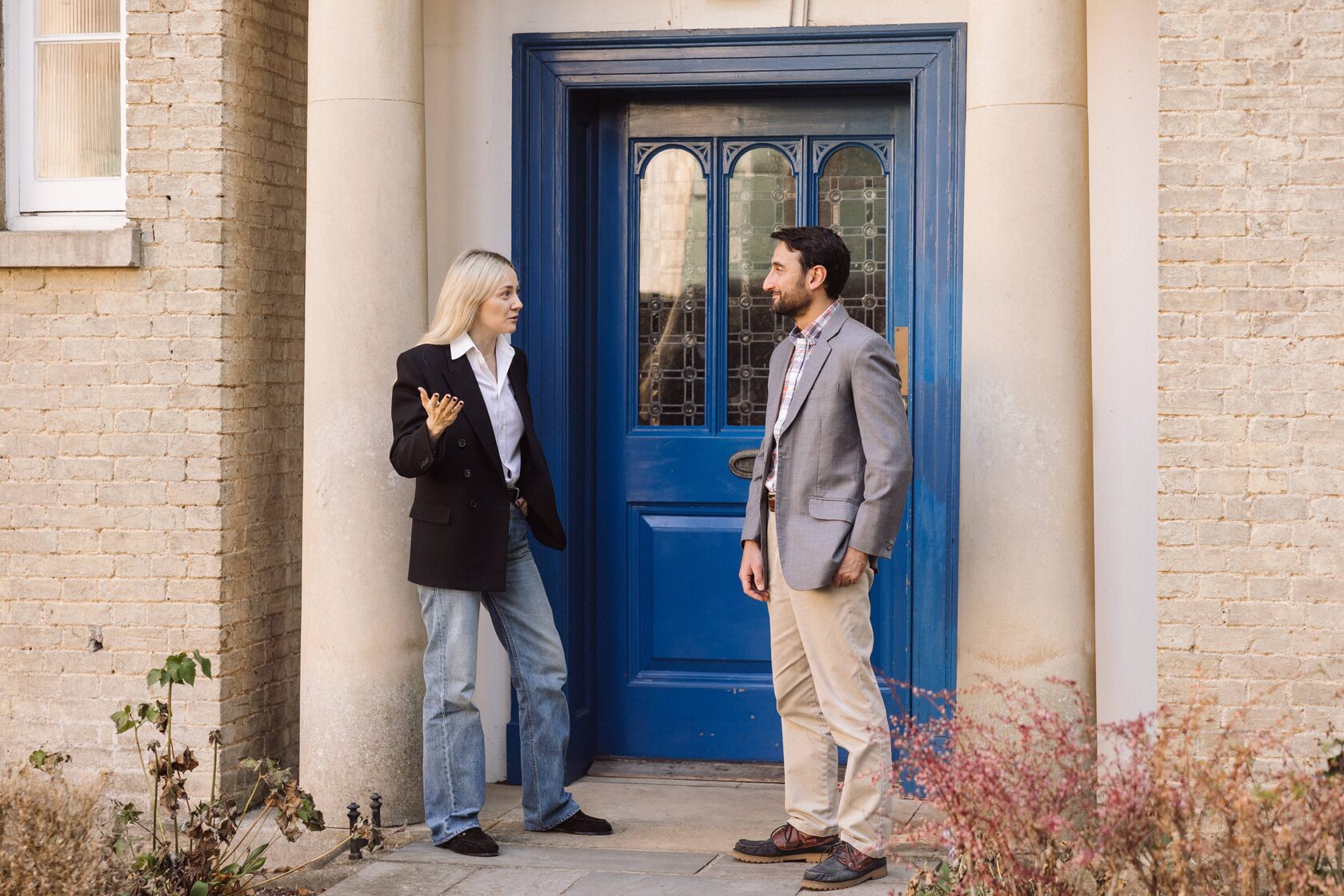
"There are a lot of unknowns out there that are awaiting people like you." Dr Zarkan's teaching treats research as an argument in progress and students as future participants in it.
What do highly successful school students find unexpectedly difficult about university-style science?
Dr Zarkan: The answer might surprise you, but I have seen it quite a lot in Cambridge. It is the ego. They come from an environment where they are — imagine it is a pond — the biggest fish in that pond. Everybody in that school thinks about them as an amazing student, a top talented student.
They come here and suddenly they realise, "I am nobody. I am just like everybody else." It can even get worse. They start realising, "I am not even at the same level as the others. There are bigger fish than me here."
Normally I see them taking one of two directions. Either they work harder, they adapt, they challenge themselves, and then you get the best out of them; or they get overwhelmed, or sometimes their ego starts kicking in and they decide, "No, I am a big fish. And if you are telling me I'm a small fish, you are wrong."
I had one student saying, "I'm the top student in my whole school. I scored 97 out of 100 last year, but I'm finding this difficult." And I said, "Well, yes. Your school is a single school, in one city, in one country. You are coming here with students from schools all around the world, from all sorts of countries. So obviously the level of learning is going to be quite different." I think that is opening his mind.
It is a conversation with a long history at Cambridge, and it has never once been had with a student who was pleased to be having it. The 97 is real, the pride in it is earned, and the arithmetic of a global cohort is nonetheless unforgiving.
What aspect of studying science at university is impossible to communicate in two weeks?
Dr Zarkan: Critical thinking. We try to plant that seed: to get them to think outside the box, to realise that there is not always one answer, that it takes debate, questioning, experiments. Some adapt very quickly, some do not. Can we achieve it in two weeks? Probably not. But we can make them aware of it, so that when they reach university it is not the first time they meet the need to think independently and creatively. We initiate it during the course; establishing it takes much longer.
"I feel like I wasn't prepared enough"
Listening to Dr Zarkan, I was curious how his observation would sit beside Anna, Saieesha and Yasmina, who were taking the same medicine course as one another. Their answers illustrate how differently three students can arrive at an identical academic experience.
I think this programme is quite challenging academically. Did you find that, or did you feel well prepared? Or were you thinking, oh my God, I have a lot to catch up on?
Yasmina: Coming here after a year of IB, I feel like if I hadn't taken IB I wouldn't have had any idea what was going on. A-levels are comparable to IB, and the style of questions too. A lot of what was taught here took concepts I had already picked up and added more onto them, and also addressed how they are used in medicine.
Anna: I have quite a similar view to Yasmina's. I felt prepared, because I watched the videos that were sent to us beforehand. But I have to say, if I hadn't done my one-year A-level biology course, I would have struggled a lot more. They build on things you have already done, or that you are doing in IB or A-level. But they take it to a university level, so they make you think more. The professors actively try to engage the students, to make us think, to get our thoughts running. I was prepared, and it was really good that I had my A-level knowledge, because otherwise I would have struggled a lot.
Saieesha: I have a completely different perspective from both of them. I feel like I was not prepared enough, because I come from a country where the education system is still developing. Even though I did six years in the IB programme plus a year as an AS-level student, it was still very different from what they taught here. I think I could have prepared more — maybe watched videos, as Anna said, or read something about the topic before coming in.
The same programme, the same medicine course, three markedly different places to be standing on the first morning. This is one reason academic experiences of this kind matter when they are used thoughtfully within a much longer preparation: they show a student the relationship between what her previous educational environment has rewarded and what the next one is going to demand.
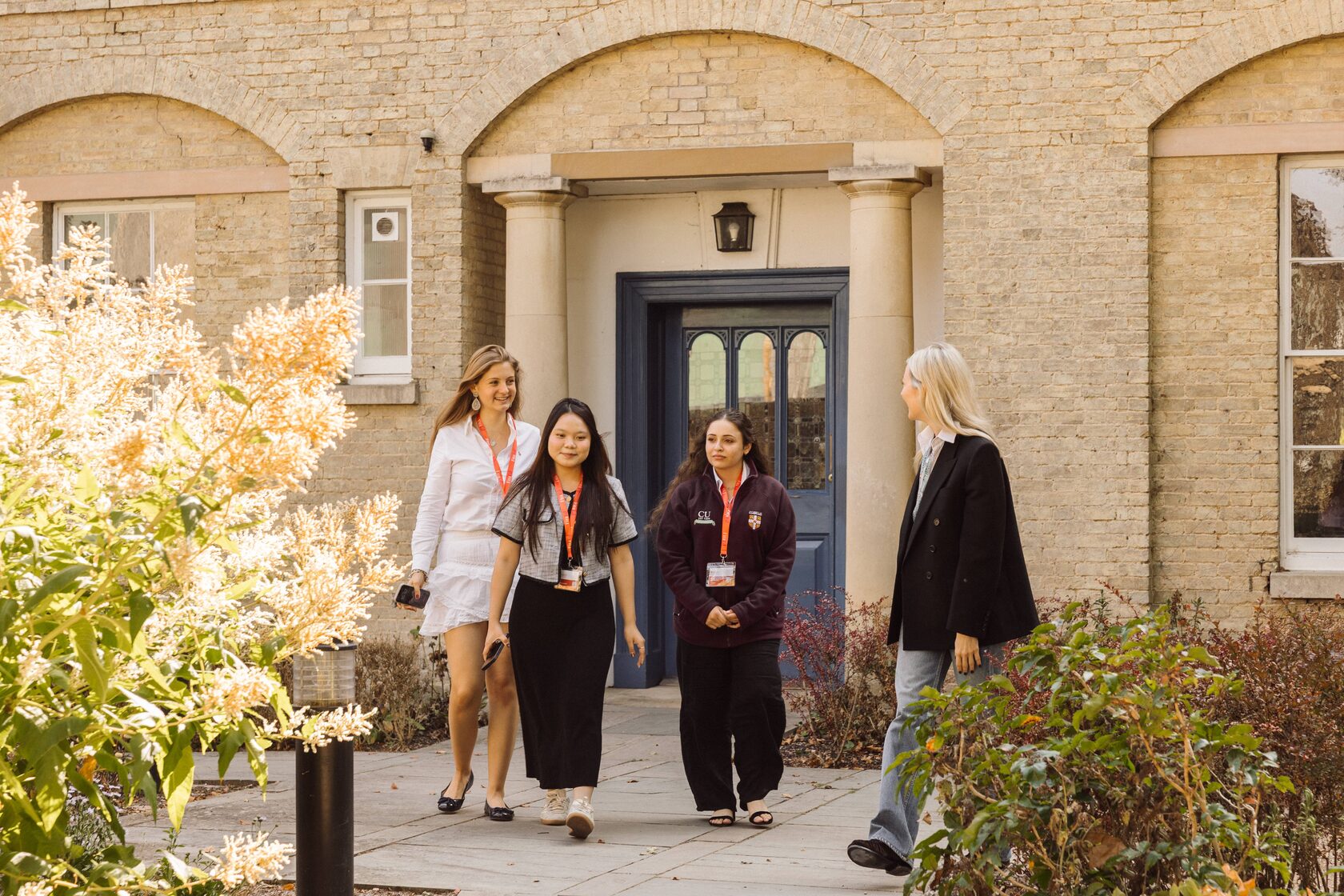
Between sessions. Much of the programme's real work happens in the gaps: the walk to the laboratory, the hour before a supervision, the evening when the research project has to be written whether or not anyone is checking.
"My brain really was running the whole time"
The supervision system came up in every conversation. Peter describes it as the programme's central attempt to reproduce undergraduate learning. The students described something more personal.
If you compare lectures, practical work, supervisions, independent preparation and conversations with other students, what was particularly helpful?
Anna: For me the most beneficial were the lectures and the supervisions. I quite like getting as much information as possible, writing it down, and later looking at it and trying to understand every little detail.
That is also why I really loved the supervision. It was just one hour, but we covered a lot. Because the groups are really small, you can ask a lot of questions. You engage with the teacher, the teacher engages with you and answers your questions individually. In that one hour my brain really was running the whole time. I was really thinking. In classes several hours long, your attention shifts. In the supervision my attention was there the whole time. That is the part I really liked.
Saieesha: I have the same perspective as Anna. I really liked the lectures as well as the one-hour supervision. The lectures were interesting because I got to see the different questions students ask the teachers, and it helps me understand how other people are thinking. Are they thinking the same way as me, or am I thinking differently?
And the supervision was really helpful for me because I am a very quiet person in class. Having that one hour made me realise that I was actually smart. It made me realise I was smart, because I could almost answer every question the teacher asked us. In the lecture I felt the pressure of the other students. It was like a competition. So I really liked the supervision.
Yasmina: Whenever I prepare for a presentation or an essay independently, if I have a thought or a question, I immediately write it down or look it up. When you are in the middle of a lecture you don't always get the opportunity. The supervisions are also helpful, but I feel like you know your own questions better than the teacher can predict them. And because I am generally a quiet person in class, that plays a role in which questions get answered, and in the way I ask them.
One format, three functions. For Anna it produced an hour of unbroken concentration. For Saieesha it released a confidence that a larger room takes away from her. For Yasmina, independent preparation remained essential, because it gave her time to follow the questions that occurred to her naturally.
Which is among the more interesting properties of genuinely student-centred education: an identical structure produces three different experiences, and all three are the point.
Which is among the more interesting properties of genuinely student-centred education: an identical structure produces three different experiences, and all three are the point.
Dr Alex Carter: what does it mean to become a university thinker?
Where Dr Bolgar challenges certainty through science, Dr Carter approaches it through the philosophy of learning. Our conversation opened with what became the central question of the whole piece.
What is the most important difference between being a successful school student and becoming a successful university student?
Dr Carter: I do a session specifically on this, because it is so vitally important to understand that it is not that schools do things wrong; it is just that there is a time for that kind of learning.
It is really important for students to understand, as they come to university, that where good behaviour, rule following, trying to get things right, seeking solutions rather than finding better questions or problematising — that's all gone. Well, not all gone, but it's refocusing on problem-oriented study rather than solution-oriented study. And realising that there are many different ways to answer a question, and they need to find the one that they can stand behind and defend reflects them.
That kind of independence is simultaneously freeing and responsibility-inducing. Because you are free to explore things as you want to explore them, there is a responsibility on you to do it the right way.
When students hear "study skills" they imagine note-taking, revision schedules, time management. What does it mean to you?
Dr Carter: I suppose it is meta-learning. It is the ability to get in front of your learning, as it were, to realise — to be humble and realise — that there are things you don't know. And that goes for the most able students more than any other, because those who are less able already know there are things ahead of them that they don't know. The able students in particular have to be able to think: why am I wrong? What are all the different ways in which I might be wrong?
So, counter-intuitively study skills is a humility exercise at the same time as being confidence-building. Students have to be simultaneously given freedom and responsibility. They have to be given accountability along with their psychological safety. The psychological safety enables them to question things and to explore and be creative. Accountability means: but you have still got to deliver.
We do a lot to avoid anxiety in our students. We do nothing to stop comfort in our students, and both are anathema to learning. If you are comfortable, you are probably not learning. If you are in anxiety, you are probably not learning. What we want is mild discomfort.
"Mild discomfort" turned out to be an unexpectedly precise description of a good deal of what the three of them had already told me. Being uncertain whether you were academically prepared. Watching a research deadline arrive faster than expected. Discovering that a different educational system has built you different skills. Speaking in a room full of highly capable people. Organising your time with nobody continually organising it for you. Deciding what to do when the teacher declines to supply the answer.
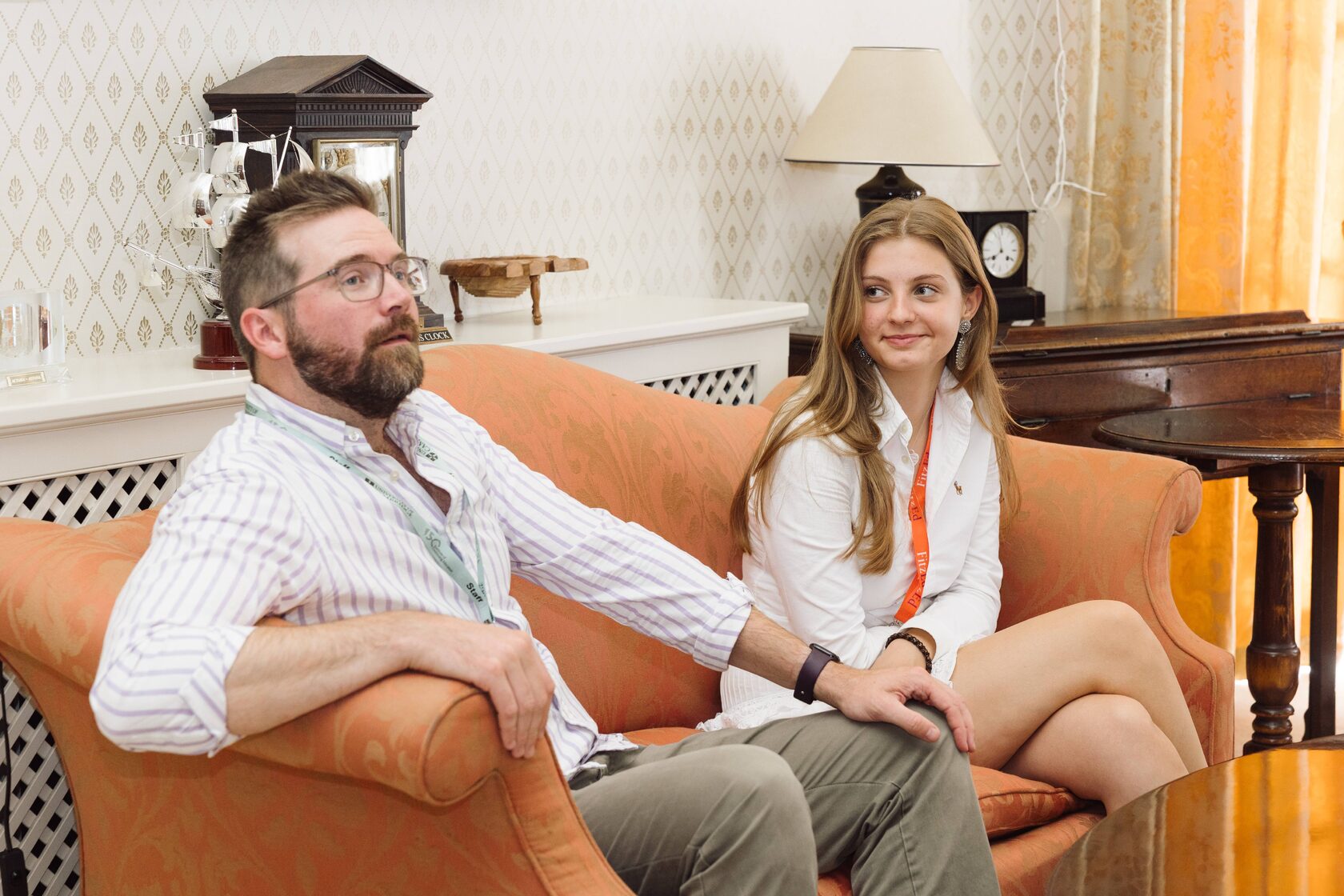
Dr Carter teaches study skills as a humility exercise. "The able students in particular have to be able to think: why am I wrong?"
"And now it's just a mess"
Beyond the academic side, what were the skills that benefited you most and that you will take into university?
Saieesha: One of the skills I would use, from my experience here at Fitzwilliam, is time management. We had only one week to work on our essay and our presentation, and I felt a bit pressured because I had no idea what my topic was about. I had to do a lot of research, a lot of learning, and I didn't have much experience writing a scientific essay using scientific terms. So it was kind of hard for me. But time management is what I have taken into account while doing my research.
And the main thing you are taking away?
Anna: Independence. With the research part I basically did it by myself and tried to figure it out by myself. And for student life itself, beyond the academic feeling: at school, or at boarding school, they really watch what you do. They monitor you. You don't have that here. They give you a lot of freedom, which I think is quite good. I like that system. You can gain a lot of independence from it.
Independence is easier to admire in theory than to live in a single room over fourteen days. When I asked Saieesha whether anything about medicine itself had changed for her, she answered partly by describing what had happened to her energy, and to her room.
Did anything change in your perception of medicine? What is it really going to be like once you start?
Saieesha: My love for medicine, my love for being a doctor, was always there. But after coming here, I felt like I still want to be a doctor, and I think I have to get used to how tired the daily life of a medical student is. It's really tiring.
The first week I was here I was really excited to learn, and then in the second week my energy started falling off. I started waking up late and everything was just not structured. The first day I went into my room I was like, okay, I'm going to keep this tidy for the whole two weeks. And now it's just a mess. I don't even want to look at it.
It was funny, and it was also one of the most convincing accounts of university preparation I heard all fortnight. Independence is more than the absence of anybody telling you what to do. It is finding out what happens when nobody does.
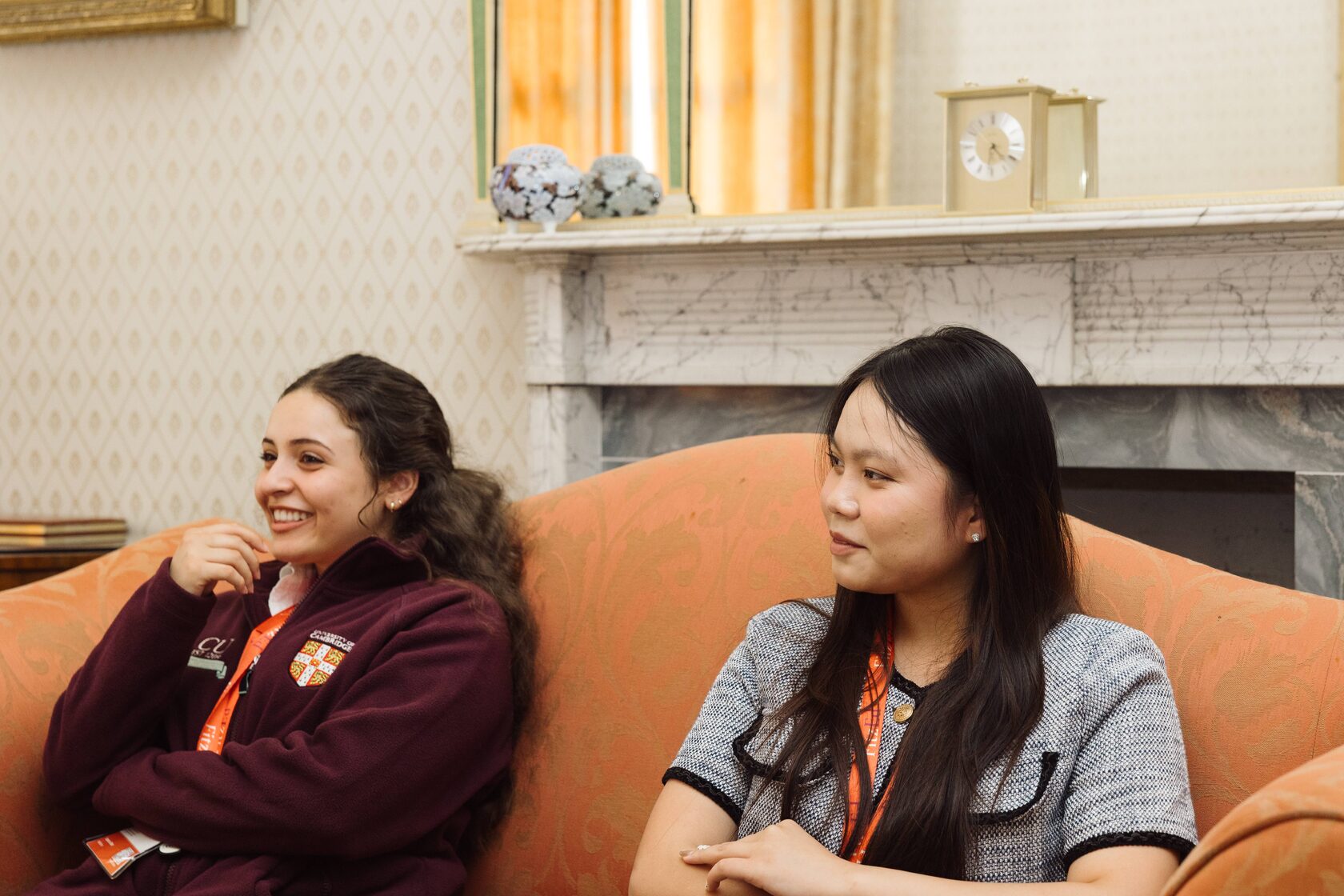
Saieesha (right) arrived from Laos certain she wanted to be a doctor, and left equally certain, with a considerably clearer idea of what the route will cost her in stamina.
"I need to explore more physics"
This was the question I was personally most interested in. A serious academic experience has no obligation to make a student more committed to the subject she thought she wanted. Sometimes the good outcome is greater certainty; sometimes it is doubt.
Anna: For me, this whole programme and the internship I did before it just crystallised that I absolutely love medicine and I really want to study it. I am already excited for my university years, because I really like the study of the human body. I saw during my internship what it is like to work as a doctor, and I am excited for the future.
Yasmina's answer travelled in almost the opposite direction.
Yasmina: I feel like I don't really want to do something that is heavily concentrated in medicine any more. In the beginning I found some of the lectures interesting. I really liked learning about the brain, but then it got confusing for me really quickly. And in others, for example the circulatory system, I just get bored so easily with that type of thing. So there are a lot of aspects of medicine I am just not taking a heavy interest in.
However, when I was doing the presentation, the concepts I had to research had roots in physics. I have never taken a physics class. At the beginning it was pretty confusing, but then later, when I kept concentrating on it and tried to give myself analogies to visualise it, I felt like with things rooted in physics there is more of an explanation and a reason why everything happens.
Dr Zarkan: Yes. Most of them arrive fixated — they come to biology saying, I want to do medicine. By the time they finish, they have already changed their mind. This year I had one student who looked upset on the first day. I asked him what was going on. He said he had wanted to do medicine, but of course it was full, so he ended up here. I said: give us some time, you might enjoy it. By the end of the week he was one of the two top-performing students, and he was doing exceptionally well. He moved from someone who thought, definitely I just want to do medicine, to someone appreciating the breadth of what he could go into in the future.
So what are you thinking now? Physics?
Yasmina: I have heard biomedical engineering involves a lot of physics. So I am thinking about that, but I need to explore more physics to fully decide that I want to go into it.
Saieesha sits between the two: her intention to become a doctor is unchanged, and her understanding of what the route will demand from her has moved a long way.
Three students entered the same medicine programme. One left with her aspiration strengthened. One left committed and considerably better informed about the cost. One left questioning whether medicine was the right destination at all, and curious about an entirely different intersection of science and healthcare. As an adviser I find this the most important distinction in the whole piece. An academic experience exists to give a young person better evidence, including the evidence with which to change her mind, and its value is independent of whether the conclusion matches the one the adults around her had already reached.
I put this to Peter directly.
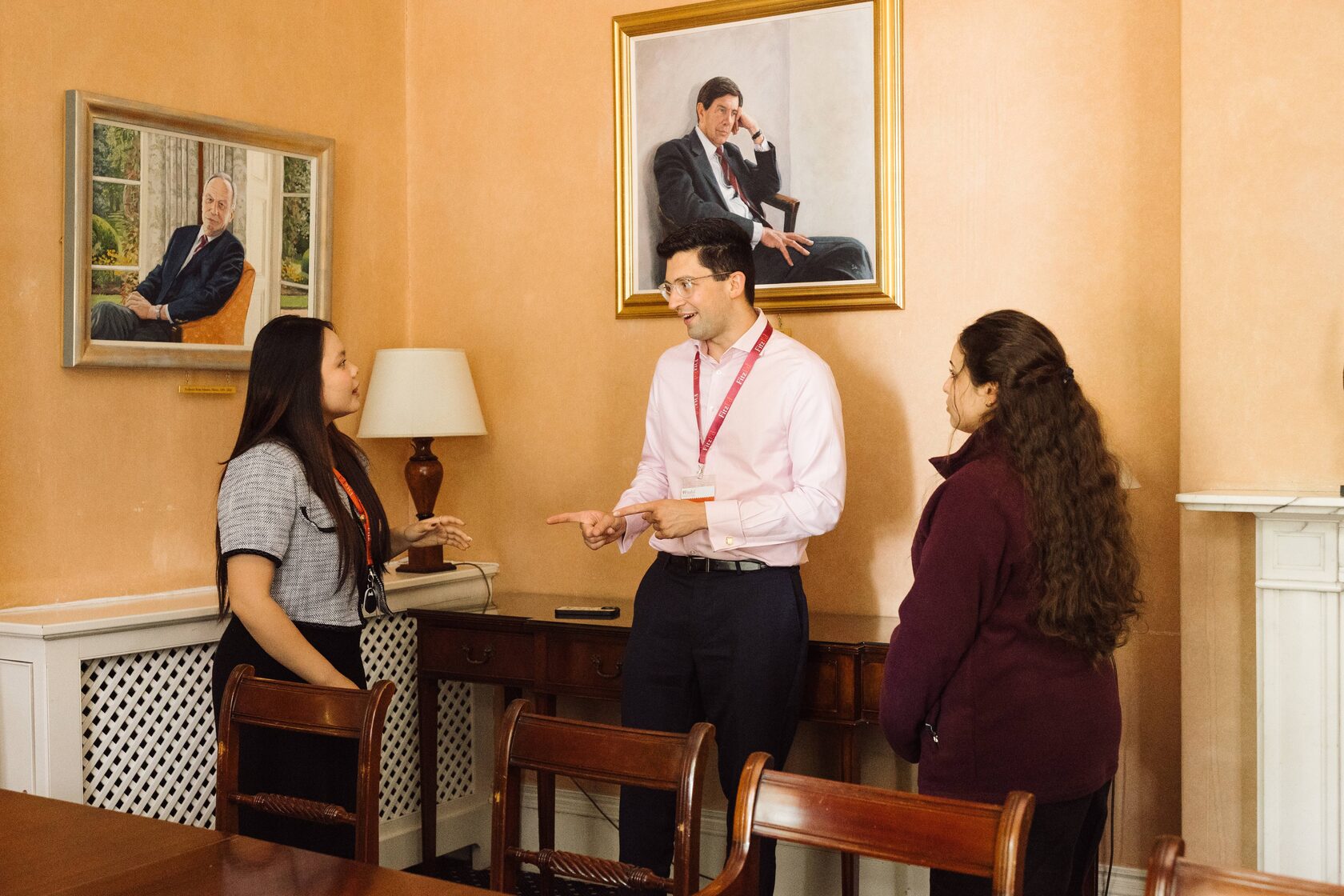
Dr Bolgar with Saieesha and Yasmina in College. He is relaxed about students who leave having decided the subject was wrong for them.
Can a programme of this length create meaningful academic development?
Dr Bolgar: I think so, absolutely. It serves two purposes. Firstly, to inspire the students for further study, hopefully in their own field if they enjoy the courses. But it has certainly happened that students have told us they realised this was not the field they wanted, and that another one was. So as long as they are more confident about their choice of subject for university afterwards — be that confirmation, or they move somewhere else — I am happy.
Secondly, I think over two weeks you really can develop your academic skills, and when you see how leading academics in their field think about their own subject, that is incredibly valuable. Of course, the more time you can spend here and the more you invest in your further studies, the better. But two weeks is a significant period.
For a seventeen-year-old, I no longer think I want this is occasionally worth more than another confirmation of what everybody around her had already assumed.
Dr Zarkan: Do I think it has the potential to change their scientific development? Yes. But frankly, you can only tell in the long run, once we start following up on those students after they finish. From my own experience I have seen it improve them. Students have written to me saying: I learned this and this, and then I did an interview and got through very easily, and they were impressed, and they asked me how I had learned all these things about biology. As a scientist I would say we need evidence, we need an experiment. And I think the evidence is already emerging, as we continue to follow the academic progress of those students.
"A bit of random chaos"
I did not want to ask only what the students had enjoyed. The question of what was missing produced one of the most useful answers of the fortnight.
You had a personal research project and a presentation. Did the sessions help you know how to structure and present them?
Anna: The session we had focused mainly on how to structure your essay and your presentation, and less on the research part. I already knew how to do a presentation, because in Germany you have to present something quite often. But I didn't really know the essay part, so the essay was harder for me than the presentation. They helped us with that by giving us information on how to structure everything.
What I would have liked was more on how to actually research well. What do you put into the internet? What do you need to cite? Sources and referencing — I didn't really know how to do that. I took my research from loads of different places on the internet, and it was a bit chaotic at the beginning. It got better towards the end, and then everything was structured, but at the beginning it was a bit of random chaos. I would have liked more focus on the research part, alongside the structure of the essay and presentation.
There is a tension worth sitting with in Anna's answer. The research process she identifies as the place she wanted more guidance is the same process through which she says she developed independence. Challenge and inadequate support feel identical from the inside; locating the line between them remains one of the harder problems in educational design, and a programme that never came close to it would probably be teaching nothing.
Peter acknowledged that the balance has already had to move once.
Peter acknowledged that the balance has already had to move once.
Is there anything that has not worked as well as you hoped?
Dr Bolgar: Every year we make some changes to the summer school. The biggest was from the first year to the second.
Originally we did not have days set apart for the research project. We were teaching new content every single day, and students had to work on their project in their free time, in the afternoons and evenings. But we realised we need to set some days apart, for us to help them write a significant piece of academic work.
So now we have the guided essay and presentation writing day, where they work in the classroom throughout the whole day, writing their projects with the faculty member in the room, having individual one-on-one chats with each student, proofreading drafts, helping them think about what other angles they can look at the topic from. We have also introduced two supervision days, because small-group teaching is very much at the core of undergraduate education at Cambridge.
And then there is the obvious limitation. It is still two weeks.
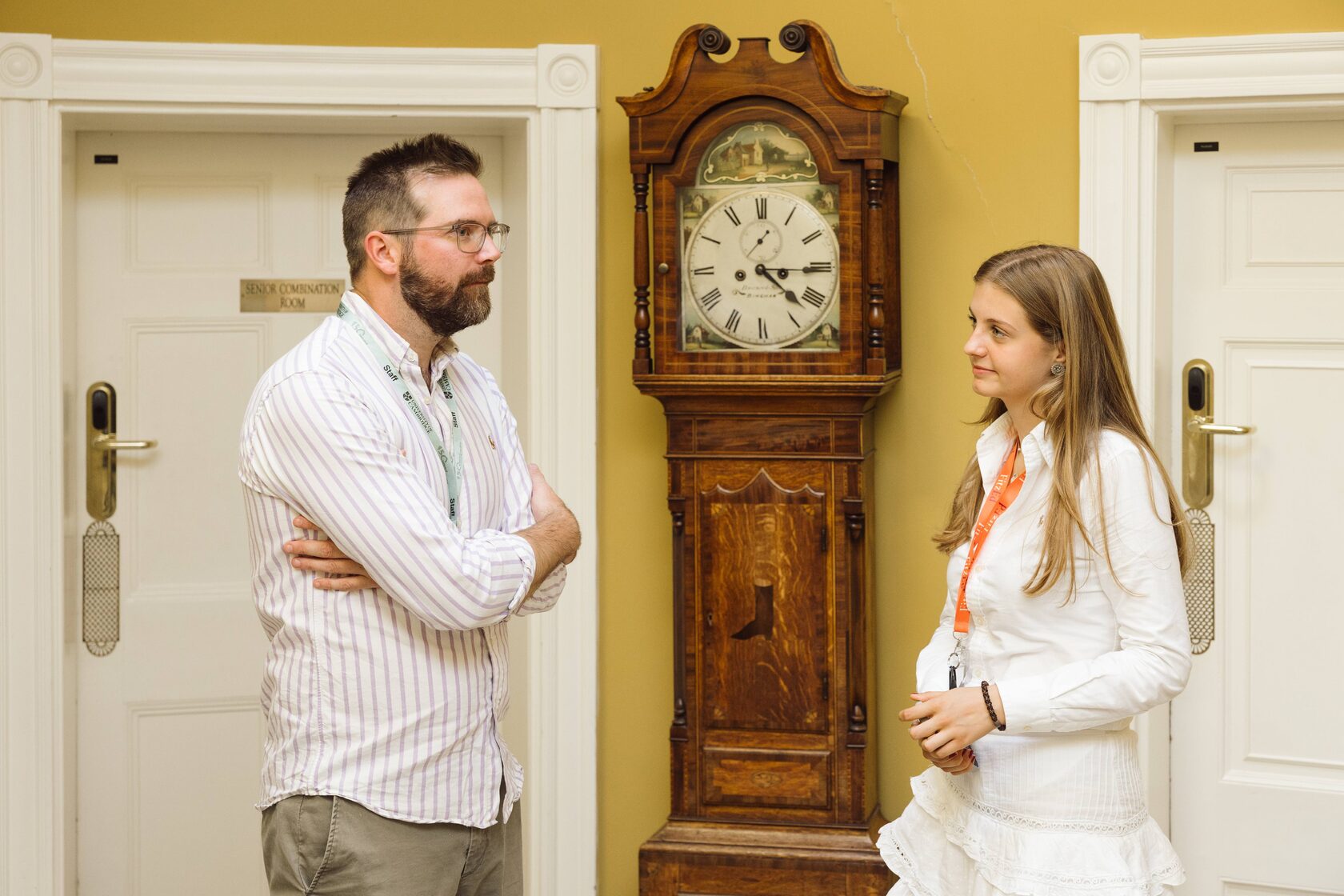
Two weeks, and a long-case clock to make the point.
Do you feel more prepared now for university?
Anna: Yes, I would say I feel more prepared, but then again, it was just two weeks. So I don't know if I can draw the conclusion that I'm going to university without any fear or anxiety, because I think it is normal to be a bit nervous.
A glimpse is useful partly because it remains a glimpse, and Anna's refusal to overstate what a fortnight can do for her is the most sophisticated thing any of them said.
Dr Peter Bolgar: "There is no point in coming here just for the name of it"
One question mattered to me beyond FitzEd, because it applies to the entire market in prestigious university summer experiences.
Many families view summer programmes partly through the lens of future admission. How do you prevent this from being reduced to a line on a personal statement?
Dr Bolgar: I understand that this is how many families view it, and it is not what we want. We always emphasise that this is about the development of your academic skills. Inevitably, if you are better in your subject, if you have better problem-solving and thinking skills, you also have better chances of getting into a leading university such as Cambridge — but you still go through the same admissions process as everybody else.
We want to motivate and inspire the students, to give them that internal drive, to enhance that internal drive, which then naturally leads to better admissions results. But I always say that every opportunity is worth exactly as much as you make of it. You can be an undergraduate at Cambridge and put barely any work into your studies, and you will not be better off than if you had gone somewhere else and worked hard. It is down to the individual student how much they make of this programme, how seriously they take it, how focused they are on their studies. There is no point in coming here just for the sake of it, just for the name of it. You also need to put in the hard work.
This is a distinction I meet constantly in my own work with families, and it is uncomfortable precisely because prestige is easy to recognise while development is hard to measure. The name of an institution records where an experience took place. What a student did inside it stays invisible to everyone except the student.
Dr Alex Carter: education in the age of AI
That distinction becomes considerably more interesting in an age when students can outsource increasingly sophisticated forms of academic work. My conversation with Alex moved inevitably towards AI, and his criticism turned out to be aimed somewhere other than at students.
What has the arrival of AI revealed about where students currently are on their education?
Dr Carter: It is not a sign of their weakness. It's a sign of our weakness as educators. AI is not the cause of our problems. It's a symptom of problems that we started well before I was even being taught. We've taught students algorithmically for years, and now an algorithm can do it better. That's the problem we as educators are dealing with.
If young people use AI for everything, eventually they will not know the difference between a world with AI and a world without AI. If you don't know how you would have done it without the AI, you will never actually do it. This generation of teachers has a custodial duty to make sure that we hand over an education system where you can see the clear differences between what it would look like to do it with and without AI.
Will AI gradually weaken students' tolerance for the difficult stages of creative work?
Dr Carter: I read a piece recently saying that AI is like a drug, but not because it gives pleasure — because it removes pain. There are people who want the least good thing that will just resolve their particular difficulty and deliver what they need in that moment. Whereas friction-maxxers are people who deliberately take the hard road to something. If they want to capture a landscape, they won't take a camera. They'll take an easel and a canvas and some paints, and they'll capture it all day if they have to. Creative pain is the kind of pain where you don't know it's going to come to an end.
Friction-maxxing stayed with me, partly for the image of somebody standing in a field for nine hours with an easel while a phone in their pocket could have finished the job before they had finished unfolding it.
Viewed through that lens, many of the programme's most valuable moments are deliberately time-consuming. The experiment that refuses to resolve. The question nobody answers on the spot. The supervision the student has to prepare for first. The research project that begins in random chaos. The moment a highly capable seventeen-year-old works out that somebody in the room knows more. The stretch of independent study during which nobody specifies what should happen next.
All of it is friction, and some kinds of friction repay leaving exactly where they are.
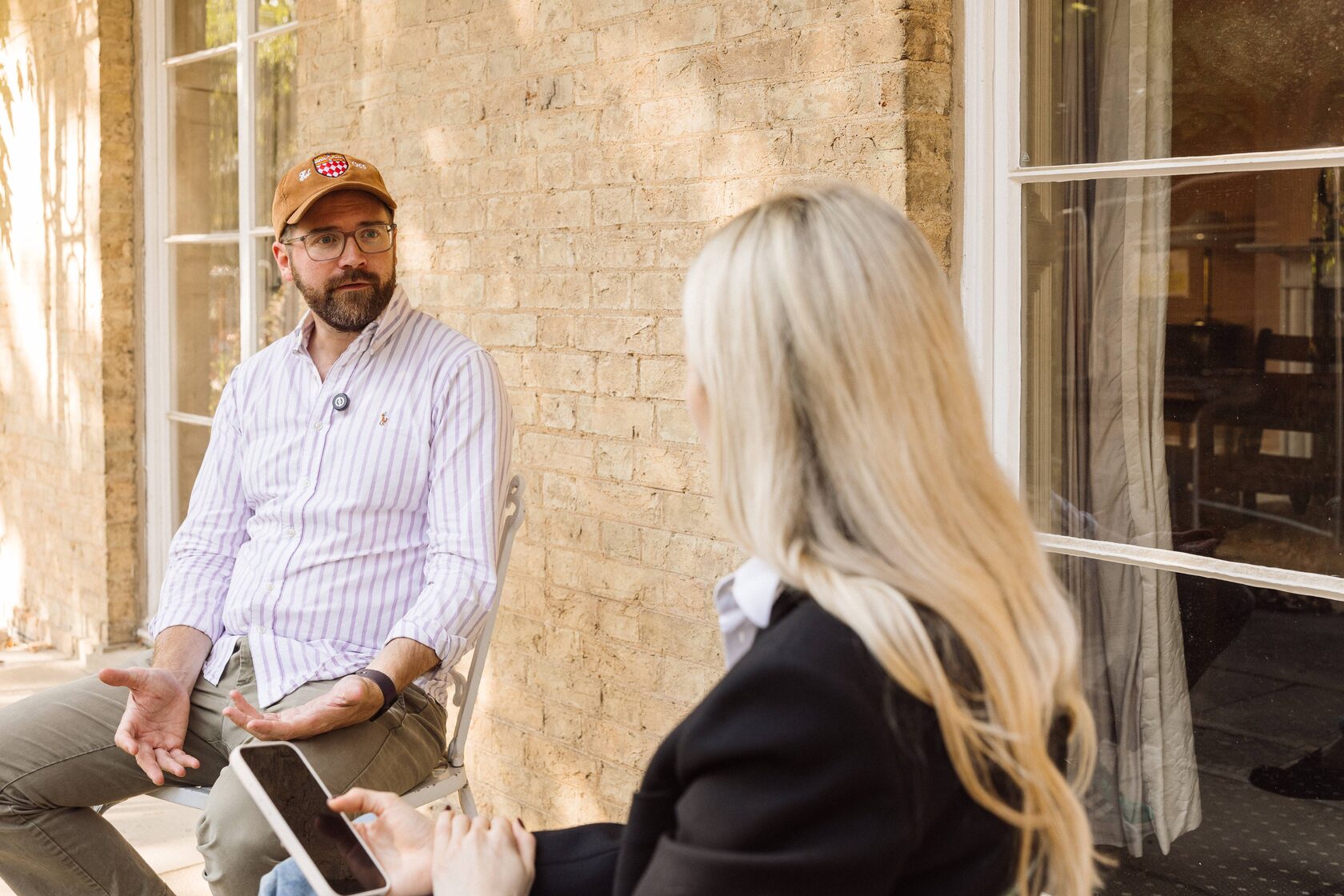
"AI is not the cause of our problems. It's a symptom." Dr Carter directs his criticism at the education system that trained students to behave algorithmically long before an algorithm could outperform them.
"Wonder, not awe"
Near the end of my conversation with Peter, I asked something that had been forming across all the interviews.
When a student leaves the summer programme, what question would you most like them to keep asking?
Peter thought for a moment. Ash's answer to a similar question had been about students arriving with the assumption that knowledge already exists somewhere and that an academic's role is to transfer it. Peter's went elsewhere.
Dr Bolgar: You need to think about how to get to the answers. I would really like, especially for the science students, for them to realise that everything is more complex than what they learn at school, and that they can't just apply the formulae they learn at school to every single scenario. They need to think: is this equation we have learned applicable here? Do I need to take other factors into account? Should I modify my equations to fit this question? I would really like them to move past mechanical thinking and explore the topic from a broader perspective.
Alex answered the same question in characteristically philosophical terms.
Dr Carter: Always the best question to ask as a student is: why might I be wrong? Because it gives you a place to go with your learning. I quite like the feeling of aporia — an ancient Greek word meaning, I don't know where to go. Being left with aporia is better than being left with a kind of false certainty.
At the end of the course, what do you hope students can do differently, beyond what they know?
Dr Zarkan: Communicate their ideas clearly. It is not simply a learning process; it is a communicating process. Can you explain it? Can you present it clearly? Can you argue back if someone challenges you? Can you explain your thinking so that other people are on board? Science communication is what I try to work on during the course. It is less about learning and more about doing something with what you have learned.
I had one final question for Alex, and his answer became the frame through which I understood most of what I had watched at Fitzwilliam.
What would you love them to take home and hold on to?
Dr Carter: I think I want them to not be in awe, but to be in wonder. Lots of them come with a sense of awe, like, ooh, this is a professor, how impressive. But to see me make mistakes, bumble about, make errors and not know answers to things that help them realise that your school teachers know more answers than your university professors do. And that's great. But that should lead to a sense of wonder, not to a sense of awe.
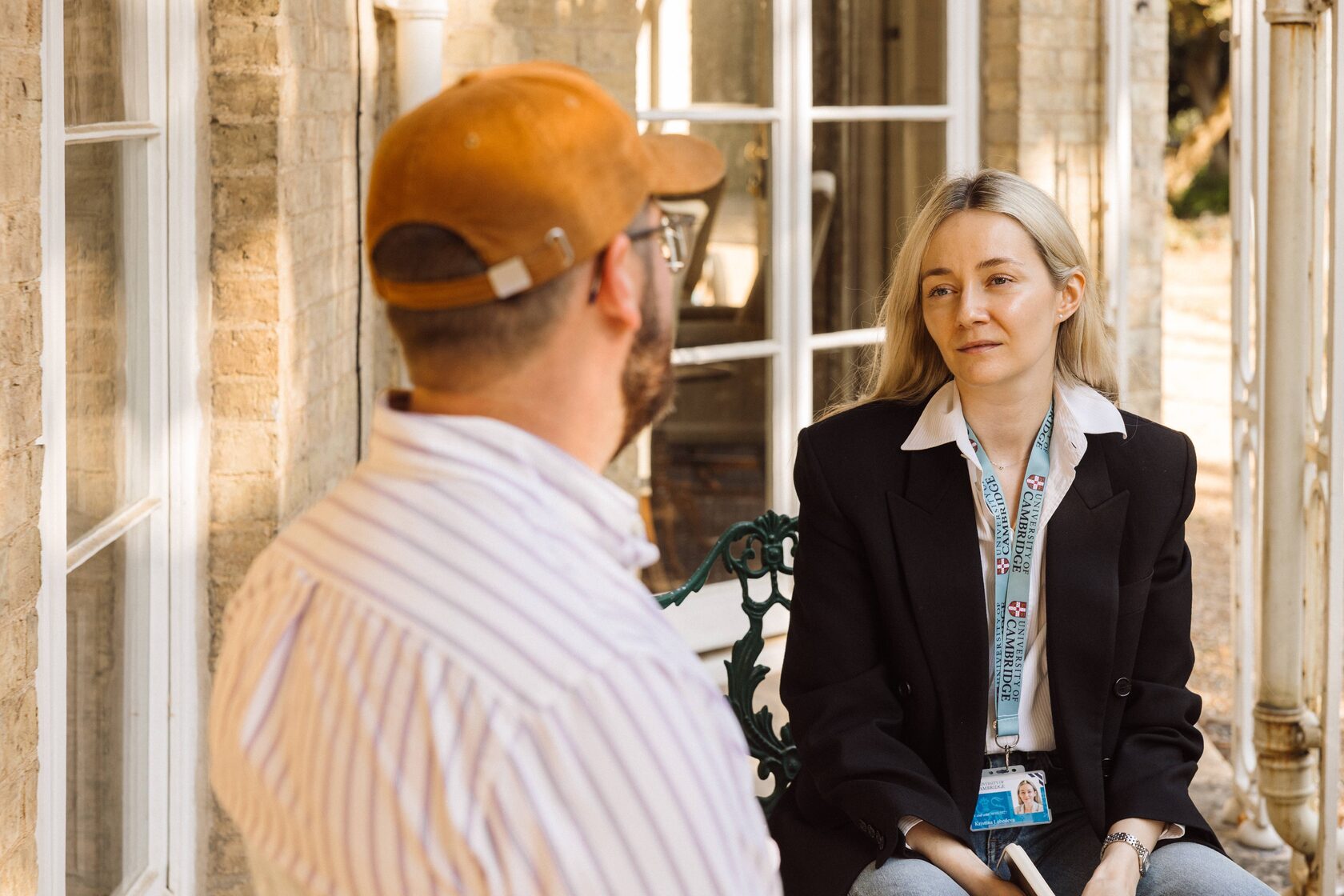
The author at Fitzwilliam College in the University of Cambridge. Three academics, three students, and one phrase recurring in almost every conversation.
"I don't know yet"
By the end of my conversations at Fitzwilliam I kept returning to a single phrase that had appeared, in different forms, almost everywhere: I don't know.
Dr Zarkan says it to a student standing over an ambiguous experiment. Dr Carter wants students intellectually mature enough to stop fearing it. Dr Bolgar describes an educational model in which the teacher gradually stops supplying everything and the student decides how to proceed. And the three of them met their own versions of it.
I don't know whether I was adequately prepared. I don't know whether this way of studying works for me. I don't know whether medicine is still what I want. I don't know whether my first interpretation is correct.
And, importantly: I don't know yet.
Adults find uncertainty in a seventeen-year-old almost unbearable, and the instinct is to resolve it as quickly as possible. Which country? Which university? Which subject? Which career? What is the strategy? What is the answer? Decisions do eventually have to be made, and good preparation for university consists of something more than handing young people increasingly sophisticated answers to questions their parents formulated for them. At some point the student has to become the person capable of asking the questions.
Anna left more certain about medicine. Saieesha left committed to it, with a clearer understanding of the stamina, independence and self-management it will require. Yasmina left less certain about medicine, and newly curious about physics and biomedical engineering.
I would call all three outcomes a success. Perhaps the purpose of university preparation is to help a seventeen-year-old become curious, independent and intellectually humble enough to navigate uncertainty, on the reasonable assumption that the future will keep declining to supply a simple answer.
Two weeks at Fitzwilliam cannot turn a secondary-school student into a Cambridge undergraduate, and it would be a strange programme that tried. What a fortnight can do is destabilise a few assumptions: that being clever means knowing the answer; that the professor is holding it; that uncertainty is evidence of failure; that independence is freedom without responsibility; that the subject a student imagined for herself at sixteen must remain the subject she chooses at eighteen; and that the hardest parts of learning are obstacles to be cleared away, when they may be the only part through which something actually develops.
There is a difference between leaving Cambridge impressed by Cambridge and leaving more curious about the world beyond what you already know. The first is awe. The second is wonder.
And, as Dr Carter put it, wonder may be the more valuable thing to take home.
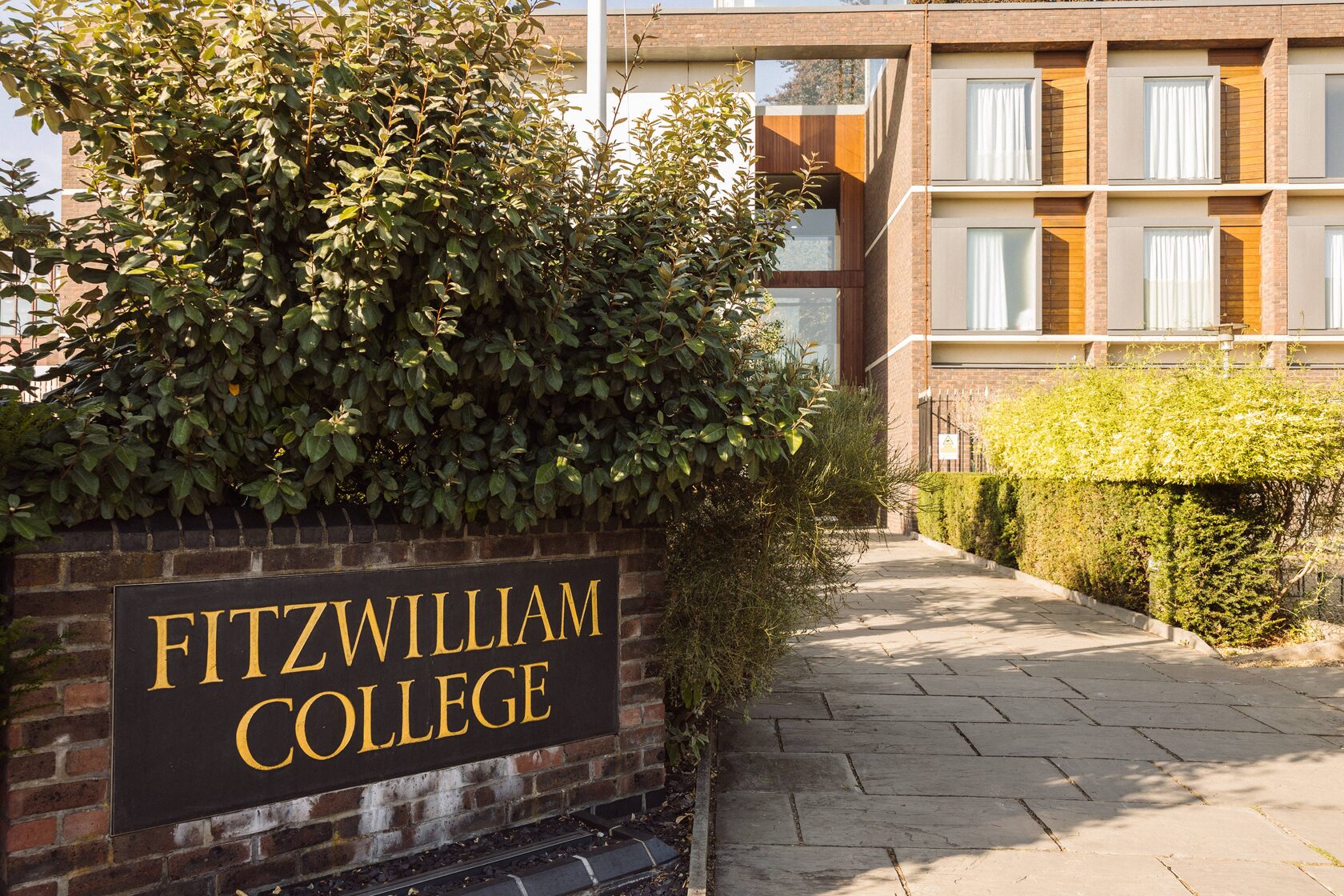
Fitzwilliam College in the University of Cambridge. FitzEd Summer School runs its two-week courses each summer, taught by current University faculty.
Editor's note: The FitzEd Summer School is the official educational summer programme of Fitzwilliam College in the University of Cambridge for international students.
Anna, Saieesha and Yasmina, the three students featured in this article, are advised by the author as part of their wider preparation for university. Dr Alex Carter supervised the author's dissertation on the MSt in Coaching at the University of Cambridge.
Fitzwilliam College made no payment for this article, exercised no editorial control over its content and had no say in who was interviewed or what was asked.
Interview answers have been lightly edited for length and clarity, and the spoken English of student interviewees has been lightly tidied; the substance of every answer is their own.
Photographer: Julia Novikova
FitzEd Summer School Programme: the practical detail
Location: Fitzwilliam College in the University of Cambridge
Length: Two weeks
Ages: 16–18 for Programmes 1 and 2; 14–15 for the Middle School Programme. Students currently studying in the UK are ineligible
Subjects offered: 23 across the three 2026 programmes, from Medicine and Psychology and Neuroscience to Astrophysics, Cybersecurity, Robotics and Critical and Creative Thinking in the Age of AI. The medicine course described in this article ran in Programme 2, taught by Professor Matthew Mason, Dr Robert Abayasekara, Dr Aaron D'Sa and Dr Saeed Kayhanian
Cohort size: Maximum 15 participants per course
Teaching: Lectures, laboratory or in-college practicals, two supervision days, one guided essay and presentation writing day, independent research project
Teaching hours: A minimum of 40 hours of tuition over the fortnight, plus problem-solving preparation for supervisions and a minimum of 10 hours on the individual research project
Taught by: Current faculty of the University of Cambridge and its colleges
Entry requirements: Grade A or above in the relevant subject, or success in national or international competitions; plus the minimum of IELTS 6.5 or TOEFL 90 (6.0/80 for the Middle School Programme). The College may arrange a short online interview
Assessment: Written feedback from the course instructor; a certificate of completion for students who attend 90 per cent of classes and complete the essay and presentation; certificates of excellence for the two highest performers on each course; the two best essays per course are bound in the FitzEd Summer School Journal and published online
Fees (2026): £7,450 for the two-week programme (£7,150 for the Middle School Programme), covering tuition, accommodation, catering, the London excursion, entry to landmarks and all social activities. Visas, flights and airport transfers are excluded
Scale: 900 students from 25 countries over the past four years
Official website: https://www.fitz.cam.ac.uk/educational-programme
Clever Magazine publishes this information so that families can evaluate the programme on their terms.
