



In this interview for Clever Magazine, Dr James Underwood — Assistant Professor and Academic Director for Coaching and English Language Assessment at the University of Cambridge's Professional and Continuing Education (PACE) — reflects on two decades in state secondary schools, a PhD completed while still in the classroom, and what it means to build communities where people truly want to stay. From Janusz Korczak's radical empathy to the permeability between coaching and teaching, Dr Underwood offers a vision of education that is as rigorously practical as it is deeply humane.
I first encountered Dr Underwood at the very beginning of my Master's degree at the University of Cambridge — he is the Academic Director of the programme I have spent the past two years completing. As an aspiring educator, I looked up to him from that first meeting, and over the course of what turned out to be an extraordinary journey, his wisdom and humility only deepened. Watching him engage with students, colleagues, and ideas, I came to understand that he embodies the very principles he describes. He has spent his career asking a deceptively simple question: what makes a community the kind of place where learning, and people, can genuinely flourish?
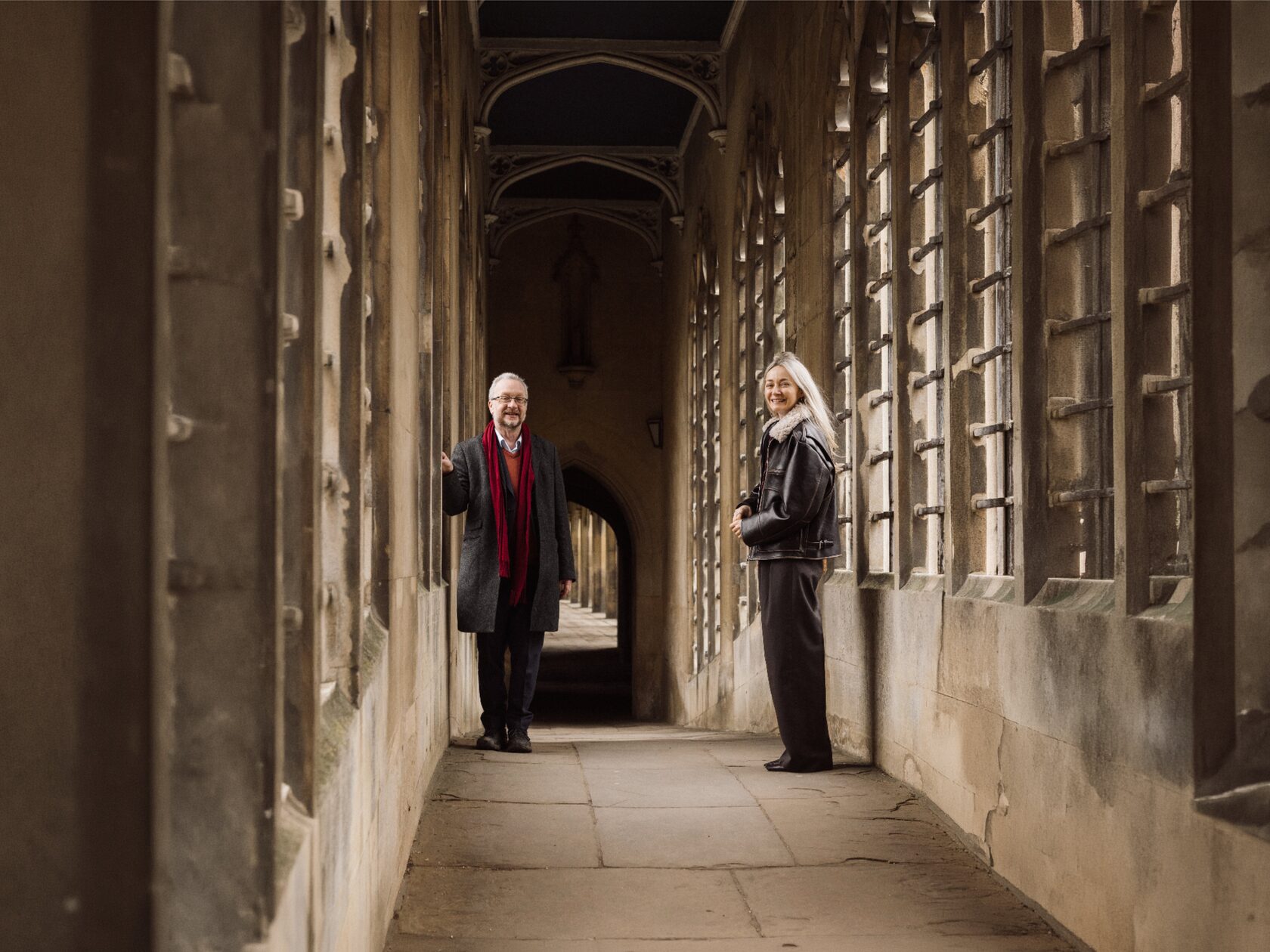
We met at St John's College, University of Cambridge. He arrived — as he always does — with a calm attentiveness and a warmth that, I now know, he believes every educator owes to every learner: unconditionally, every single day.
You spent twenty years in state secondary schools — teaching English, history, sociology, and the humanities — before moving into university life. Looking back, what did those classrooms teach you that no academic institution ever could?
Children are very good judges of what a great teacher is, and they consistently say the same things. They like clarity — absolute clarity. They like passion for the subject: he loves drama and he makes me love drama, or he loves science and he makes me love science. And then there is something harder to name, but equally essential: you have to have a deep sense of leaving yesterday behind every time you walk into a room.
One of the most important things anyone ever said to me — and I still believe it to this day — is this: they don't have to like you; you have to like them. It doesn't matter what they've done. Even if Jake has been excluded for the last two weeks, you walk in and say, it's really nice to see you, Jake. I'm glad you're here. Get your bag out, get to work. You are the adult in the room. You are emotionally unaffected, but you are consistently kind, and every day is always a new day for everybody.
That's not something you read in a textbook. Twenty years in classrooms gave me that.
You completed your PhD while still working as a teacher, exploring how knowledge is shared in communities that support their members. Was there a particular moment in the classroom — a student, a conversation, a failure — that first made you want to understand that question scientifically?
Once I entered senior leadership, the biggest practical battle for any school is very simple: getting good staff and keeping good staff. And once you're north of Ely, you're not talking about places where a twenty-two-year-old teacher with a whole life before them is necessarily desperate to settle. I've advertised for posts and received a single applicant.
So if you're going to keep people, you have to have a community that people want to be in. As a school principal, you have frustratingly little control over what's happening minute by minute in the lessons. But what you perhaps do have is some influence over the nature of the community that makes people say: actually, I want to stay here. That became my research question — not as an abstract curiosity, but as a genuinely urgent practical problem.
Your career spans teaching, leadership, coaching, assessment, and academia. Is there a single thread that unites all of it, or does the variety feel like the point?
There is a thread, though I'll admit I've published in fields that seem wildly unrelated — including one paper in the Journal of Midwifery, which I find genuinely hilarious, because I am really not a midwife. But the thing that connects everything is professionals researching their own spaces.
I was deeply influenced by David Frost at Cambridge, who writes compellingly about the danger of academics parachuting in from outside and telling professionals — nurses, teachers, police officers — how to improve their practice. What truly interests me is when the professional is the researcher. A teacher researching how they teach affects the children they teach that same week. A nurse researching mother's voice in birth affects the mothers she's working with tomorrow. That atomised, powerful, small-scale research — I think that's actually how the world gets better. It's less dramatic, perhaps, but a million teachers each making their practice a little better is how schools genuinely improve.
Your doctoral research centres on how learning happens within communities that feel safe and supportive. Yet so much of professional life — including school culture — is competitive and hierarchical. How do you build genuine trust in an environment that doesn't naturally reward vulnerability?
The NHS gave me the best model I've encountered: a genuine no-blame approach to mistakes. When something goes wrong, the question of who is at fault never arises. The questions are: what went wrong, and where do we go from here? Because the moment people fear blame, they start to hide. They start to bury it.
I think workplaces are, if I'm honest, really hard on people. If you think about the times in life when people have cried because of stress, it's almost always family or workplace. Family makes sense — those are your most important relationships. But that a workplace could carry the same emotional weight? That's genuinely unfair. The very least leadership can do is acknowledge it.
When I built my PhD, I looked at the kinds of knowledge being exchanged within professional communities and arrived at four types. First, that you are learning — that you feel a sense of personal growth. Second, that you have the freedom to be creative — schools can crush this terribly; I've worked with what a colleague called "secretly creative teachers," people doing fascinating things in their classrooms but hiding it from their principal. Third, a sense that what you do matters. And fourth, that people you respect tell you you're good at your job. If a dancer hears "you're brilliant" from someone who's never danced, it's sweet, but it doesn't land. If the principal of the Royal Ballet says it, that changes everything. Remove any one of those four, and you're already building a community people will want to leave.

You've published on Janusz Korczak's legacy — the Polish educator who believed in children's rights long before it was fashionable. What drew you to him, and what does modern education most need to reclaim from his philosophy?
What drew me to Korczak is that most progressive educationists — wonderful as many of them are — were working in controlled, idealistic settings with sympathetic families. Summerhill was essentially twenty children on a well-resourced summer camp. I ran a school of fifteen hundred. But Korczak was working with the very poorest children in society — children of the Jewish ghetto in the 1930s, and then, tragically, into the 1940s when they were killed alongside him. There is something deeply powerful about progressive education being practiced in conditions that were genuinely, brutally tough.
And Korczak was never naive. He never said you don't need to control a space, or that children don't need to be taught. He was talking about the fundamental principles of why you're doing it, and how you're seeing the child. One of his radical claims at the time was simply: we should not hit children. That now seems obvious. But the aspect we still haven't fully absorbed is the depth of consultation — the idea that children's voices should be heard in anything that affects them. Not as a tokenistic exercise, but universally, structurally, every time.
There is a long-running debate about whether coaching and teaching are fundamentally different acts. You seem unconvinced by that boundary. Do you think coaching is a form of teaching, and can you genuinely teach through coaching?
I think it is permeable — but only one way. Teaching cannot borrow from coaching wholesale. Some elements of teaching are what I'd call fundamentally asocial. If you're teaching a geography lesson and students drift onto discussing last night's football match, you have to say: that's for break time, we're talking about geography, look at me. If you did that to friends in a pub, you would have no friends. That asocial authority cannot be imported into coaching.
But coaching has a great deal to offer teaching. The principle of finding solutions through questions rather than direction — that's enormously powerful, and many experienced teachers are already doing it intuitively. I think of a brilliant French teacher I worked with early in my leadership career. She was staying up until midnight preparing beautiful vocabulary cards and illustrated materials. The problem was twofold: she was burning out, and the children were learning nothing — because she had written all the French. What she needed to do was arrive with a stack of blank cards and say: you're making the flashcards today. The moment you write a French word yourself is the moment you might actually remember it. Coaching's central insight — passing responsibility for learning to the learner — is transformative when brought into a classroom.
Student voice and children's rights run through a great deal of your work. In your experience of state schools and universities, how often is student voice genuinely heard versus merely performed?
It is performed with genuinely good intention in most UK state schools — but it remains genuinely challenging to do well. The moment you ask for student voice, you face the question: whose voice? Have you really reached everyone? And there are legitimate fears that student feedback will be used punitively against teachers, which causes schools to water it down.
I learned a good lesson from Essex County Cricket Club, of all places. When Keith Fletcher captained them in the early 1980s, they had no international players, a poor ground, and no money. And they won everything. His philosophy was: you've got the team you've got. You can't imagine buying a superstar. So you take the players you have and you build something extraordinary with them. The same is true of staff. If your German teacher is struggling, intimidating her with unfavorable student reviews might mean you end up with no German teacher at all.
So I would never ask a group of students "what went badly?" I ask two questions: what went well? And what would be even better if it happened? They are more intelligent questions, and they get you to the same truth without making a teacher feel publicly condemned.

Coaching as a profession has been built almost entirely around adults. Yet you are interested in what coaching looks like for children and young people. Does the traditional coaching model need to be dismantled before it can work with a younger population?
No. Simple answer: no. Specific frameworks — GROW, perhaps — might need adapting in their language. But the fundamental principle of assisting someone to find solutions through conversation, without instructing, is entirely coherent for children at any age. If you ask a two-year-old "what do you want to eat, and do you think that will make you feel good for the rest of the afternoon?" — you can have an intelligent exchange. You don't open with "what are your goals and what is your current reality?" but the underlying logic holds.
Many experienced parents do this instinctively. Many great teachers have learned that this is what works with an individual student. It not only could exist in schools — it already does. You can hear it if you walk the corridors and listen carefully.
You are based at one of the world's most iconic universities, in a department dedicated to lifelong learning. Does working within Cambridge's name and reputation change how you think about access, privilege, and who education is really for?
Yes, profoundly. And I'll be direct: the bit of Cambridge I most want to work in is PACE, because of the way it reaches communities of learners who are not the classic Cambridge student — and I mean that with no disrespect to classic Cambridge students. I was proud when I taught sixth formers who got their three A-stars and went to elite universities. But there is something powerfully distinctive about adults returning to education later in life.
Children are learning experts in a peculiar sense: even children who aren't doing well know the rhythm, the rules. They've been in institutions their whole lives. A typical PACE student may have been out of education for twenty or thirty years. They are skilled, capable professionals in their field — but they're returning to a domain where they perhaps don't feel confident. Adults need support and praise just as much as children do. They are not always brave. Remembering that is essential.
As for Cambridge itself — I think it has genuinely changed, and genuinely for the better. It was very slow to award degrees to women, very slow to become a meritocratic institution in any real sense. But I believe it is now, perhaps ninety percent of the way there, a place where you will genuinely often find the brightest minds from any background, any part of the country. That is an impressive and important thing to have done.
If you imagine a student — of any age — who has just finished one of your courses and is walking out into the world, what is the one shift in how they see themselves or their practice that would make you feel your work had truly mattered?
This may sound contradictory coming from someone at Cambridge, but I want them to leave thinking: what I've done here is extraordinary — and in a way, I'm not that special. Because what I would most want them seeking, in everything they do afterwards, is the brilliance in everyone they work with. It exists everywhere. Not just in elite institutions. Not just in people with the right credentials.
I think when people arrive at Cambridge they expect it to be uniquely magical. And it is, in its way. But the learning goal of being here — the real one — is understanding how Cambridge is part of a vast ecosystem of brilliant people doing important things at every kind of university, in every kind of professional context. Part of becoming an academic here is learning to respect the professionals and researchers at every other institution, in every field. Cambridge gives something important. But so does everyone else. When a student walks out understanding that, I feel my work has mattered.
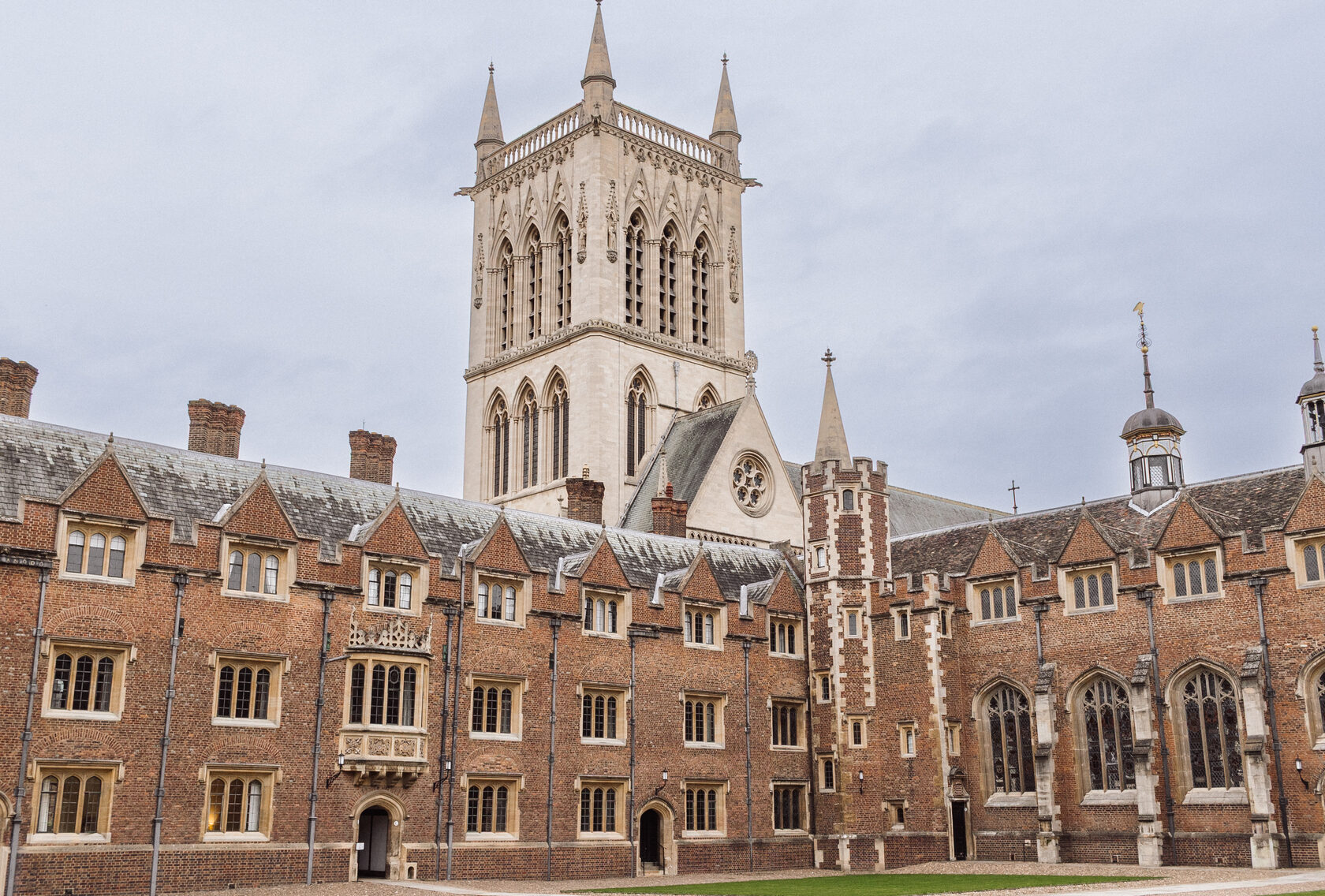
After our conversation concluded and we walked out into the grey Cambridge afternoon, I found myself thinking about a word James had used several times without ever making it a talking point: consistency. Consistent kindness. Consistent professionalism. A consistent belief that every day is a new day for every person in the room. In an education landscape often pulled between data and idealism, between accountability and wellbeing, he offers something rarer: a coherent practice built from the inside out, over decades, across every age group, in the full complexity of real institutions.
Dr James Underwood is Assistant Professor and Academic Director for Coaching and English Language Assessment at the University of Cambridge's Professional and Continuing Education (PACE). After twenty years in state secondary schools as a teacher of English, history, sociology, and the humanities — and then in leadership roles — he completed his PhD at the Faculty of Education, University of Cambridge. His doctoral research explored how knowledge is shared and how learning occurs within communities that foster positive and supportive environments. He subsequently spent ten years as Principal Lecturer in Education at the University of Northampton, leading innovative degree programmes for teachers, teaching assistants, mentors, coaches, and other professionals. Now at Cambridge's PACE, his research spans practitioner knowledge communities, coaching and mentoring in education, student voice, children's rights, and adult self-directed learning. Recent publications cover environmental education, dance education, the use of coaching in schools, and children's stress coping mechanisms.
To find out more about Dr Underwood's research, teaching, and PACE courses — including the MSt in Coaching — please visit the PACE website or explore his publications via ResearchGate and Academia.edu.
Photos: Julia Novikova
