


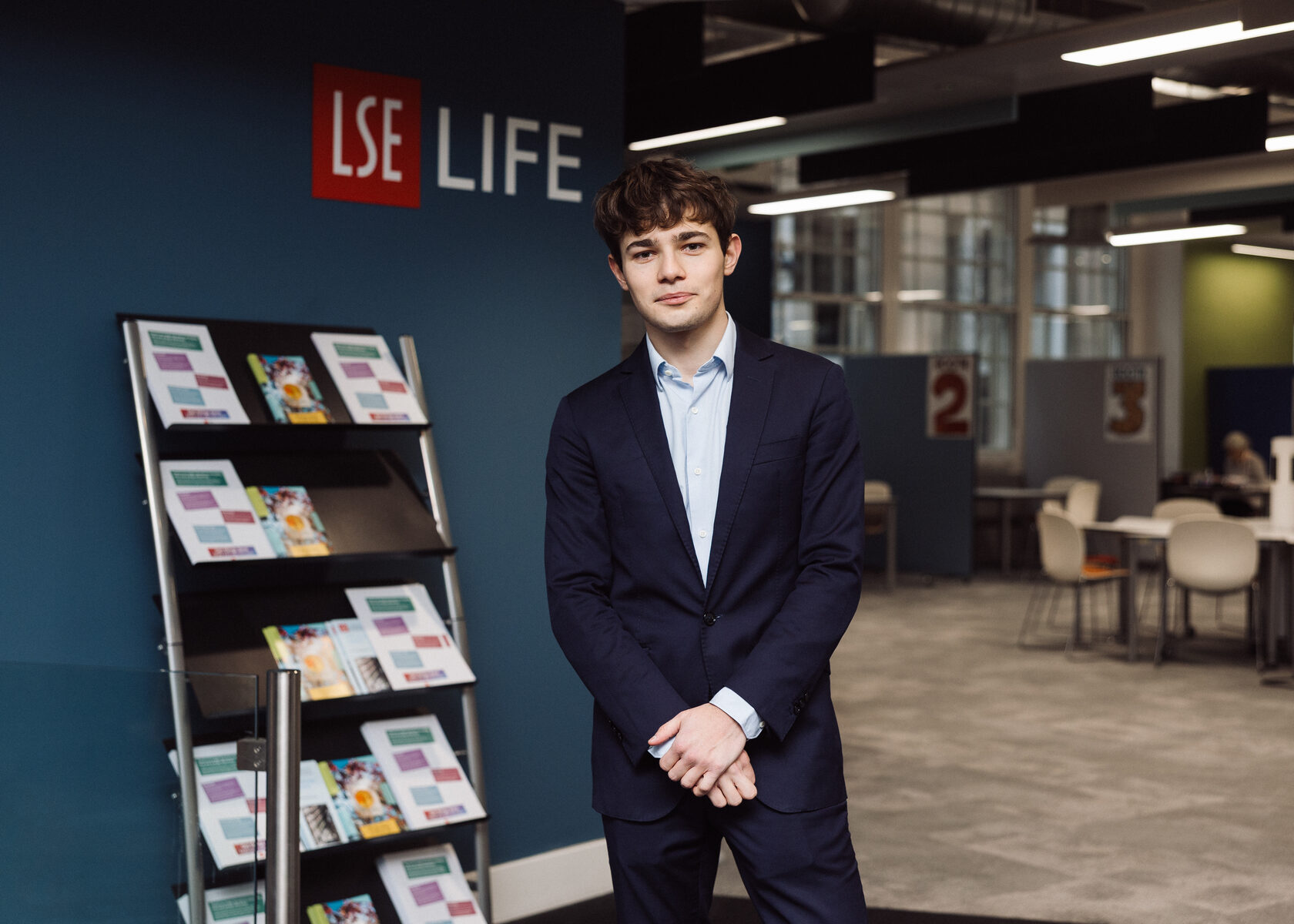
It's a few days before New Year's Eve 2026. The LSE building is quieter than usual, most students have already left for the holidays, but Hector is still here.
He is nineteen, French, raised in London, and the product of two cultures he describes with equal affection. He grew up inside the Lycée Français in South Kensington — a bubble of four thousand French students in the middle of one of the world's most international cities — and came out of it with a foot in both worlds. His grandfather is an economist who had friends at LSE and came here to give talks. Economics was always his subject. LSE was always his destination. Until it wasn't.
The rejection letter arrived after a personal statement that listed thirteen books, summarised all of them, and critically engaged with none. LSE even wrote to tell him so. Most students would have taken the verdict and moved on. Hector accepted a place at King's College London, spent six months trying to build an airline startup, made an AI video that got twelve million views, was a committee member of a society that won Society of the Year, before being elected president at the end of the year — and on the side, quietly rewrote his personal statement. This is the story of what happened in the year between those two moments.
Tell me about your background. How did you end up being someone who grew up in London but feels deeply French?
I'm French, but I've been living in London for about twelve years. I was born in Paris and moved here when I was seven. I went to the Lycée Français in South Kensington — which was an amusing situation in itself. Around four thousand French students in the heart of London, only speaking French all day. I've always felt very French culturally, but I also really love London. The multiculturalism, the energy, the way so many different people can share one city. Since going to university I've made many international and British friends, and I think that internationality is one of London's great gifts. In Paris, most people don't actually speak English. So it is pretty nice to be in a place where you can speak with anyone.
When it came time to apply to university, how did you approach it? What was the thinking?
I applied both in France and the UK. LSE was my top choice by a long distance. I also applied to King's, Edinburgh, Oxford, and Leeds here, and about thirty universities in France because the French system allows it — they were safe options. But really I only seriously considered two cities: Paris and London. I wasn't ready to move continents yet. Some friends were going to the US or Canada and I admired that, I just needed familiarity. I needed to be somewhere I already knew.
What drew you to LSE specifically? It’s not just prestige for you, is it?
It was the degree: Economics and Economic History. That combination only exists at LSE. When you do Economics and History at Edinburgh, you actually study history — not the history of economics, which is what I really wanted. LSE felt like the perfect combination between math and a literary approach to the subject. Applied economics is basically models — simplifications with math. You simplify reality. But when you apply those models to history, you see that they don't always turn out to be true. History brings in depth. It helps you understand economics, really.
In France, we study economics through social sciences — economics and sociology together, very little math. So I knew I didn't want pure economics here because I'd end up with only math modules. Economic History was the way to bring in the depth I was looking for. I remember reading through LSE's course list and their recommended reading and thinking: yes. This is it. This is what I want to study.
You applied to Oxford as well the first time around. When you decided to reapply, why LSE again and not Oxford?
I only reapplied to LSE because Oxford's deadlines were much earlier and I wanted to take the time to work properly on my personal statement. But beyond logistics, if I could have chosen between both in an ideal world, I think I would still have preferred LSE. Oxford doesn't offer Economic History alongside Economics the way LSE does. And studying in London matters to me — the students you meet, the variety of speakers, the internships and conferences and part-time opportunities. It's all there on your doorstep. LSE is also, I think, simply the best place in the world to study economics. It's in the name, after all.
But they said no. What happened?
I honestly believed I'd get in. Which was naive, I know that now. There's something they tell you at LSE — you were a big fish in a small pond. You're going to be in a much bigger pond. I didn't understand that at the time. My academic record was strong — nineteen out of twenty in economics, eighteen in math, twenty in the final exam. But I must say that math in the French system is not at the level of A-level math, and you see that when you arrive here.
It was my personal statement that let me down. LSE emailed me to say so. Looking back, it's obvious. I included thirteen books. I listed them, I summarised them, but I didn't critically engage with any of them. The statement had no flow, no thinking — more like a bullet point list of readings than a narrative. And I didn't mention math at all, which I later realised was essential for the programme. LSE wants to know you can think, not just that you've read.
Looking back, you identified not mentioning math as one of your own mistakes. But math was something you'd found joyless at the time — so when you rewrote the statement, were you honest about that, or did you have to project a confidence you didn't fully feel?
It's not really about finding math difficult, more joyless, as you say. When I rewrote the statement, I was honest about that. I mentioned how math and statistics can help make sense of economic data and test theories, which is what I appreciate most about it.
How did you take the rejection?
It hit hard. LSE was the only university I visited — I hadn't even bothered seeing the other campuses. I'd fully pictured myself there. The corridors, the seminars, all of it. There was even a rumor going around that if you hadn't received a rejection by a certain date, your chances were better. So I really pictured myself getting the offer. And when I didn't, that image just collapsed.
My family were very supportive. My father told me something I've thought about a lot since: 'It's good to have a big failure. It'll teach you something.' In high school I'd always got good grades. This was the first big failure I'd had. So I needed a few days to recover. Then I regrouped. I accepted a place at King's College London, and I made a decision on the same day: I would reapply to LSE.
You chose King's over Edinburgh specifically because of its proximity to LSE.
Exactly. I thought, if ever I transfer, it will be easier from King's. You can meet people from LSE. You can go to talks at LSE. The city was part of the strategy.
King’s College is a respected university. Was there any part of you that thought: maybe this is enough, maybe I should just stay?
Socially, I genuinely loved King's. I was part of the King's Entrepreneurs Society, which won Society of the Year from the King's Business School. We had some remarkable people come through — the Glucose Goddess spoke at one of our events early in the year. There was real energy in those rooms. Some of my best friends now are from that year.
But academically, it wasn't the degree I'd wanted. I was studying History and Political Economy — not Economic History. I didn't feel the same passion. The workload was lighter. I had a free day every Wednesday, which I'd fill with other projects. I knew I wasn't being stretched in the way I needed to grow. That gap between where I was and where I knew I wanted to be — it was always there. And I think clarity like that is actually precious, even when it's uncomfortable. Especially then.
What does running a successful society actually teach you that attending one doesn't?
There is a lot of work behind the scenes that people don't see. It's not just asking a guest to come and booking a room. You send many cold emails before getting a single answer. There's paperwork with the university. And then the hardest part: getting people to actually show up. Good, effective marketing to fill a room is much harder than you'd think. There are probably more than fifty events happening across London universities on any given day. What makes yours stand out? That question kept me up more than once.
Society of the Year is a real achievement. Did winning it ever make you question whether leaving King's was the right call?
No — I always knew I wanted LSE. It's been my dream from the start. But I was genuinely sad to leave. I'd already started planning my second year at King's, just in case LSE didn't come through. And I'd grown very attached to the society and the team we'd built. Since then, my friend Maxim has taken over and is doing great work. I'm still in contact with many of the incredible people I met there.
You also started an airline startup that year. Where did that idea come from?
I wanted to offer discounted flights for students — last minute tickets, basically unsold seats. I worked on it for six months. I had calls with economists, with airlines. I discovered amazing things — I learned, for instance, that sometimes airlines don't take extra passengers because the plane needs to be a certain weight, and that they can actually make more money transporting cargo instead. The business models behind it were fascinating.
But it wasn't conclusive. Building a startup in aviation — it sounded too good to be true. No tickets were ever sold. But I learned a lot. And I think that's what a startup really is at this stage — not a million-dollar idea, just an idea you put out in the world and test. The failure taught me more than the idea ever could.
And then there was the AI video that reached twelve million views. What was that actually about?
I was working at a startup called amo, they launch apps. One of their projects is called Bump, a geolocation sharing app where you can see where your friends are in real time. I was part of their marketing team from May to early July, making AI-generated content. One of the videos I made reached twelve million views. It was right at the beginning of the AI video wave — the gorilla-style content that was circulating everywhere at the time. It was really something to be there at that moment. It was an ad, but the goal was also to make people laugh, and it worked.
After that I freelanced for them over the summer, still making content. Then I got to LSE and had to send them a message saying I simply couldn't manage anymore. They were very understanding and just told me to focus on my studies.
Did it open any doors?
Not formally. But I do mention it when I talk to professionals or people launching startups, and they always ask for advice on content creation. I'm always very happy to help.
What changed in the second application? What did you actually do differently?
Everything. I rewrote the personal statement completely from scratch. The structure was different — LSE actually publish guidance on what they want to see, and I followed it properly this time. Fewer books, but much deeper engagement with each one. Not summaries, but reasoning. The idea was: I read this, and it made me wonder about this, which led me to this economist, which made me think about this. A chain of thinking, not a list.
I also cited texts from LSE's own reading list, which I'd avoided the first time because I thought everyone would do that and I wanted to stand out with my own finds. A friend already here set me straight — the people reading your statement are your future teachers. They want to know you've engaged with what they've suggested. So I did that, and added things I'd found independently on top.
I mentioned math properly this time. I made the final paragraph specifically about LSE — why this program, why this place. When you're only applying to one university, you can afford to do that. It feels more personal. I think it was.
One deliberate choice: I didn't mention King's anywhere in the application. I went to an LSE open day specifically to ask about this — whether reapplying from another university would hurt my chances. The answer I got was ambiguous, but it planted a doubt. I decided there was nothing about King's that would dramatically strengthen my case, so I applied as an independent candidate with a fresh letter of recommendation from my high school economics teacher. I wanted the application to stand entirely on its own.
And it worked. When you got in the second time, what did that feel like?
It was different from what I'd imagined when I first applied. The first time I wanted LSE because of the image of it. The second time, I'd actually thought carefully about why I belonged there, what I'd contribute, what I genuinely wanted to learn. The acceptance meant more because I understood what I was accepting. I could see my mom's reaction, my dad's reaction. It was a dream come true.
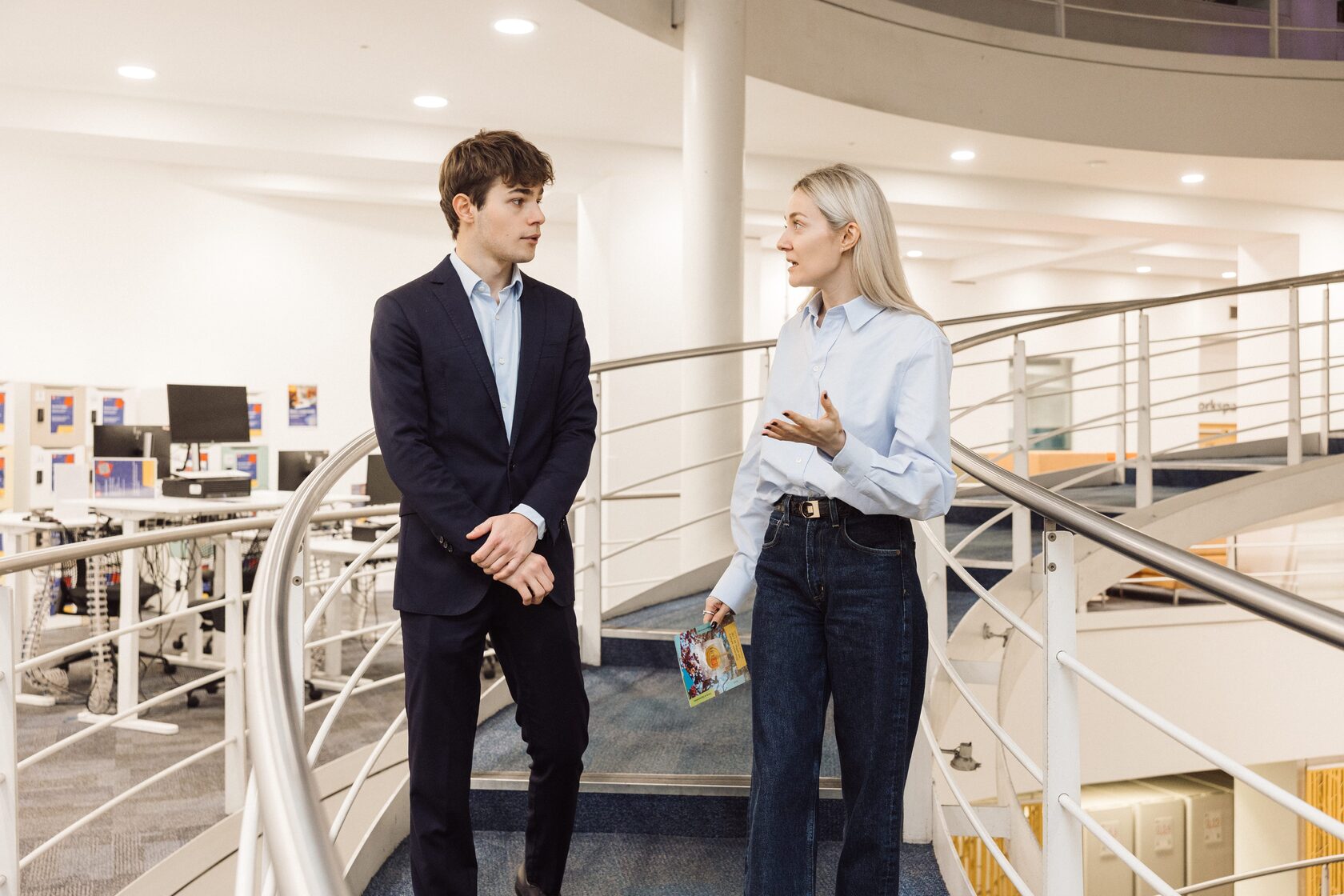
You’re now inside LSE. How does the reality compare to the idea you’d built up?
It's intense. The workload is far heavier than King's. At King's I could divide my work by subject across the week — one subject on Monday, another Tuesday, another Thursday, another Friday — and still have Wednesday free. Here that's not possible. We submit math exercises every week that are marked and count towards our grade. Same for microeconomics. It's structured in a way that forces you to keep pace, which at first felt almost like school, but the corrections are incredibly useful. You learn more from seeing where you went wrong than from doing the exercise itself.
What's also special is the support. We had academic mentoring meetings every week for the first five weeks — that didn't exist at King's in the same way. My academic mentor from the economic history department checks in on everything: classes, essays, social life. The professors are genuinely impressive — this year Philippe Aghion, who won the Nobel Prize in Economics, is at LSE. And the students around me are extraordinarily driven. The typical LSE student is already thinking about spring weeks, summer internships, where they want to be in five years. That's the spirit of the place. It suits me."
When did the shift with math actually happen — was there a specific moment at LSE where it clicked?
There was no single moment. I had started doing some research on math applied to economics while at King's, and that continued at LSE. At some point it just stopped feeling like an obstacle and started feeling like a tool. I genuinely enjoyed the math course here.
Is there a moment so far at LSE where you thought: yes, this is exactly why I came back?
Every day, I'm happy working inside this institution. I'm certain I want to be here — there's no doubt about it.
How would you describe the difference between a King's student and an LSE student?
I feel like the difference people imagine between King's students and LSE students is much bigger than it actually is. But LSE does have a particular spirit. The LSE student will be applying to spring weeks and summer internships — and that's all they can talk about sometimes. At King's it was different. The student body felt more international to me — I met people from almost every country in Latin America. Here it's diverse too, but there seem to be larger national groupings. And King's is simply bigger, so the chances of meeting someone you immediately click with are higher.
At LSE people are more individually focused. It's not unfriendly, I've met amazing people here. But before a friendship forms, there's often a sense of: are we going to work on something together? Could we build a startup? That's just the energy. It's different from King's, not better or worse. Just different.
You’ve mentioned entrepreneurship a few times. Where does that come from?
I discovered it at the Entrepreneurs Society at King's. It was a great society — very active, which is partly why we won Society of the Year. At the start of the year they asked the room how many people had built startups, and twenty-five or forty hands went up. In my head, building a startup was so complicated — like it had to be a multi-billion dollar company with employees. That moment reset my thinking entirely. A startup is really just putting your idea out in the world and testing it. So I tried.
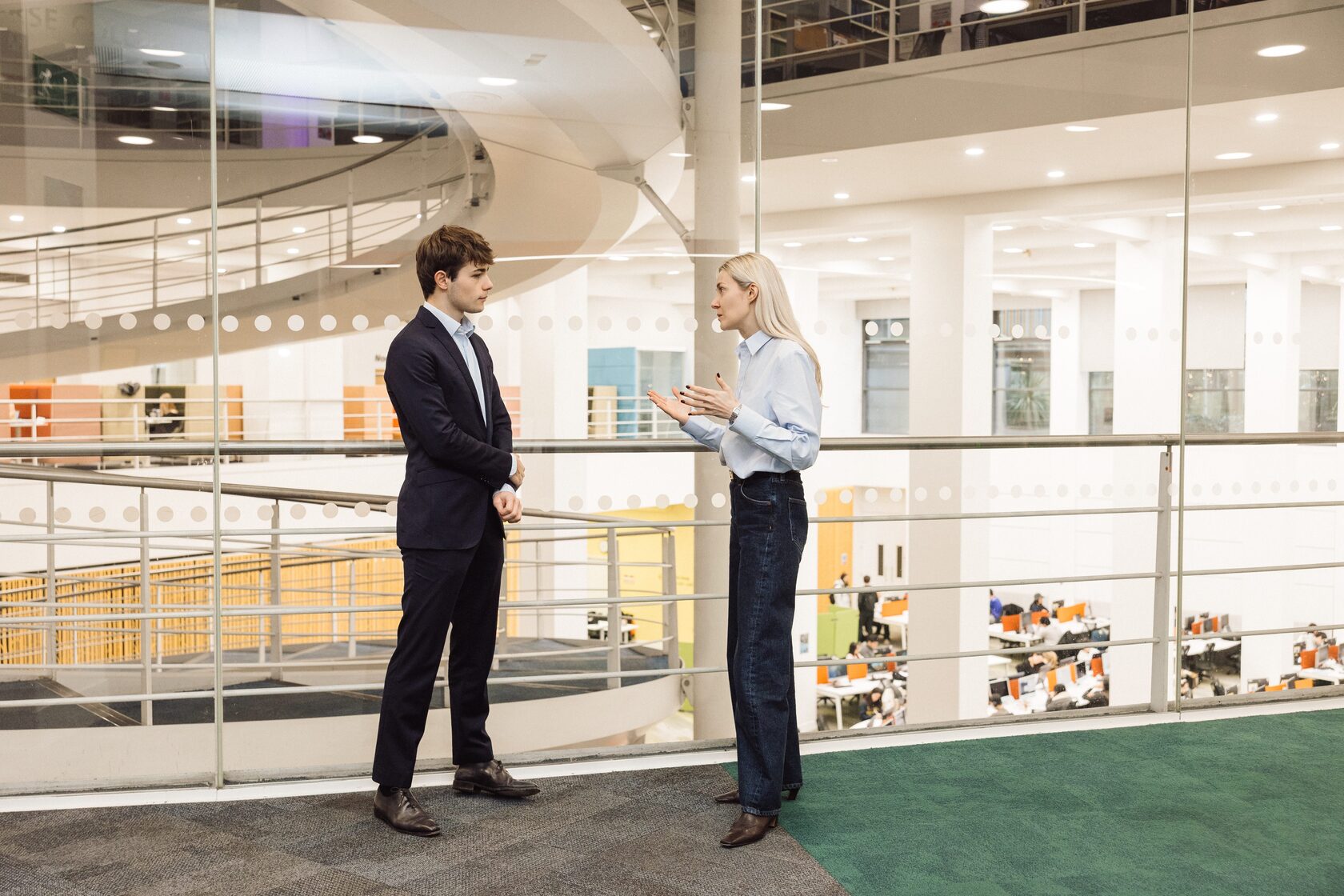
What would you say to a student sitting with a rejection from their dream university right now?
Reapply. It's that simple. Most people don't realize how straightforward the process actually is — even professors here ask me about it, as if there must be some secret. You just redo UCAS. You write a new personal statement. That's it.
What I'd say is: go to your new university and enjoy your degree as if you're going to stay. Reapplying doesn't mean you're going to leave — it just means you're keeping the option open. And when you get your decision, you decide then. You might get in and still choose to stay where you are because you've built something real there. You might not get in and feel fine about it because you tried. But you won't carry the regret of never having tried.
Don't compare yourself with others during the process either. There's a part of this that is genuinely personal — sometimes a reader just doesn't connect with how you've structured your thinking. A rejection is not a verdict on who you are. Getting into a university is important, but it doesn't define the person that you are.
Now that you've reached your goal, how do you define success differently?
What we learn in high school and early university is that success is defined by grades and by the university you get into. I don't think that's true anymore. If someone gets sixteen out of twenty instead of eighteen because they were ill on the day of an exam, they are the same person whether they study at Imperial or somewhere else. The grade doesn't change who they are.
For me now, success is the satisfaction you get from learning. It's finding the right people and the right path and being happy in what you do. Even when I was at King's — not the happiest on my first day, not where I'd wanted to be — I put on a smile, went and talked to people, and met incredible people. I had fun. Success is not the destination you pictured. It's what you build along the way.
Last question. What’s next for you?
I've paused a few projects to focus on my studies. Exams need to come first, and I've learned to be honest with myself about capacity. The summer is when I'll properly return to my own ideas.
But honestly, what surprises me most is that I'm enjoying what I study in a way I never expected. Even math, which I used to find joyless, has become genuinely interesting. Math applied to economics — that I love. There's a pleasure in rigor that I didn't understand before.
More than anything, I want to build a life that reflects who I am: someone who carries two cultures without having to choose between them, who isn't afraid to start again, and who believes you can create your own second chances.
The rejection taught me that. And I'm grateful for it.
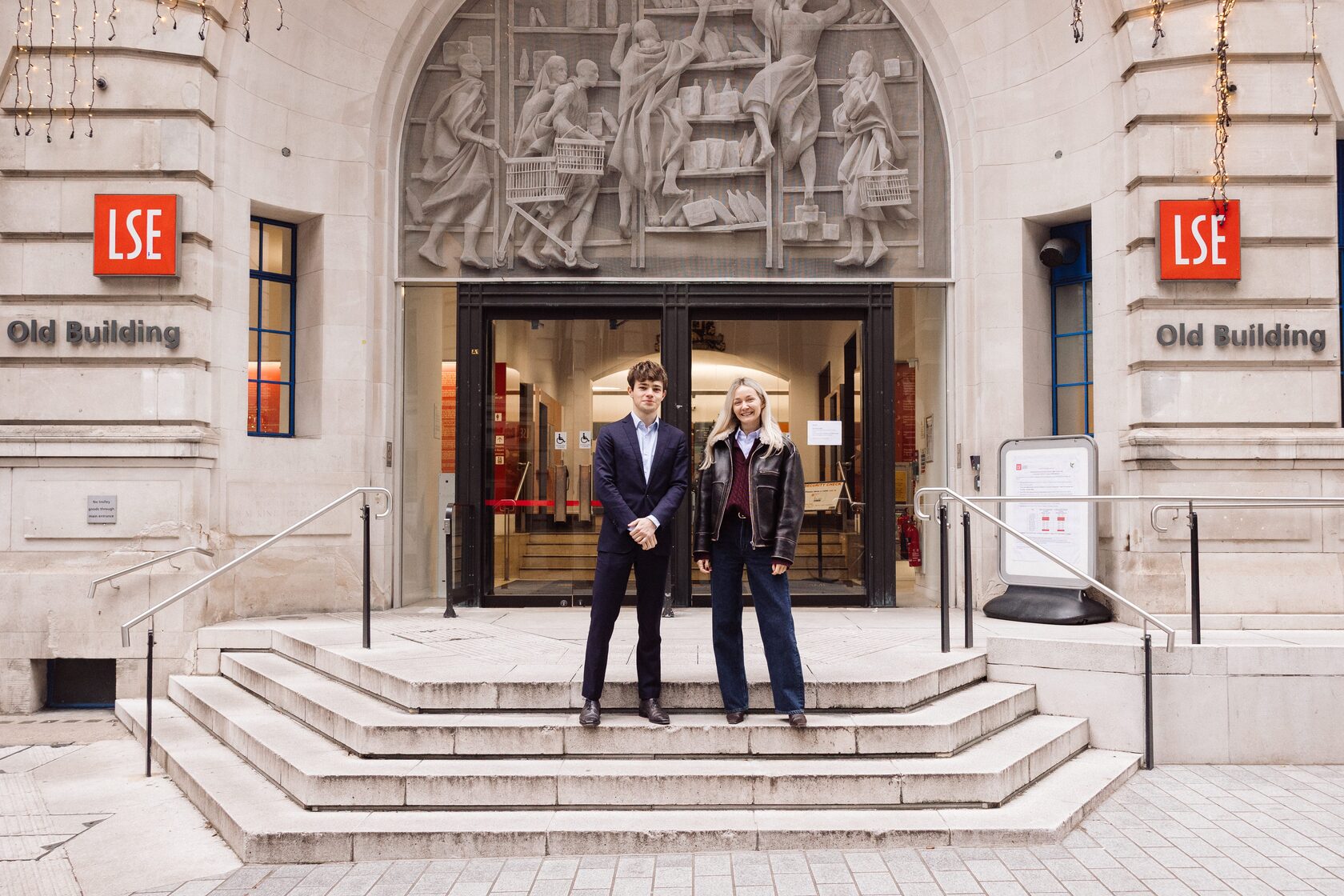
Hector Laine is a French student studying Economics and Economic History at the London School of Economics. Before LSE, he spent a year at King's College London, where the King's Entrepreneurs Society won Society of the Year. He is a Campus Leader and Content Creator at Lovable, is involved in Young Founders of London, and is developing ideas in the startup space. Connect with Hector on LinkedIn
Photos: Julia Novikova
